

Death of the cheap seat: How sports figured out they could charge you almost anything for a ticket
You know the feeling. Your team’s in a critical game, and you’ve decided that you’re going to splurge. You know it’s going to cost you, but hey, you only live once, right? So you get prepared for the tickets to go on sale, you track down your ticket-site password, you log in, you use the special pre-sale code you get for being a fan of the team forever, you wait in the queue, you get your chance to buy the tickets, and then you see …
… holy [expletive], tickets are how much?
And then you decide that maybe you can watch the game on TV after all. That way you’ll still have next month’s rent.
You’ve seen it everywhere across sports and entertainment. Teams, leagues and promoters have ditched the old entertainment model of packing the house at lower costs to generate both energy and ancillary revenue (think: beers, merch, long-term fandom). Instead, everyone’s looking to extract the maximum immediate revenue from premium customers, those most willing and able to pay high prices.
We’re here because a confluence of circumstances — the rise of data collection and tracking, the post-pandemic desire for attending live events, the use of variable pricing strategies, plus a healthy dose of short-term cash grabbing — have jacked the face value ticket prices into the stratosphere.
The World Cup is the most obvious offender, with tickets initially listed in the thousands of dollars. But examples exist all across sports, from presale tickets for the Knicks’ NBA Finals games starting at just below $2,000 apiece to single-day tickets to last fall’s Ryder Cup running $750 apiece.
Why have ticket prices spiraled faster than gas prices? Who’s driving this claw for cash? Are cheap bleacher seats gone for good? Has profit finally defeated fandom once and for all?
“People are getting so demoralized by what’s going on,” says Dave Clark, a senior reporter for Ticket News. “You’e got this situation where the people that are the most passionate about whatever the event is are feeling like they are nothing more than a revenue figure on a bottom-line spreadsheet, as opposed to a fan with a relationship with the performer or the team. The long-term potential damage is meaningful.”
How we got here
There was a time when ticket prices were fixed and posted; you’d know well before buying your ticket exactly how much the seat would cost you. There was also a time when humans traveled by horse and buggy, but that’s not coming back either.
For most of American sports history, the typical stadium experience contained myriad market inefficiencies … or, put another way, left piles of cash on the table. The problem, from the fan standpoint, and the opportunity, from the team’s side, came when teams stepped back from the concept of civic partnership and responsibility and began taking a much more pragmatic dollars-and-cents approach. When teams began taking a closer look at the entire attendance lifecycle, the possibility for harvesting much more cash became clear.
To start, there’s a fixed and inflexible upper limit to possible ticket sales, one that’s existed for millennia. SoFi Stadium in Los Angeles, site of next year’s Super Bowl, has a seating capacity of 71,000 … which happens to be roughly the estimated seating capacity of the Roman Colosseum. (Though it’s worth noting the Colosseum does not have luxury suites, and would need some serious upgrades if it ever hopes to host a Super Bowl.) There are only so many courtside seats at a basketball game, only so much space behind home plate at a baseball game.
Given the limit on potential tickets — there aren’t multiple Super Bowls each year, and there’s no realistic way to build a 500,000-seat stadium — the fastest way to increase revenue is to charge more for the tickets that can be sold. That’s simple economics. Add a few incentives to sweeten the deal, and you can lure in more status-hungry, disposable-income fans. That’s simple psychology.
So what do you do if you’re a team armed with this knowledge? You think big. Real big.
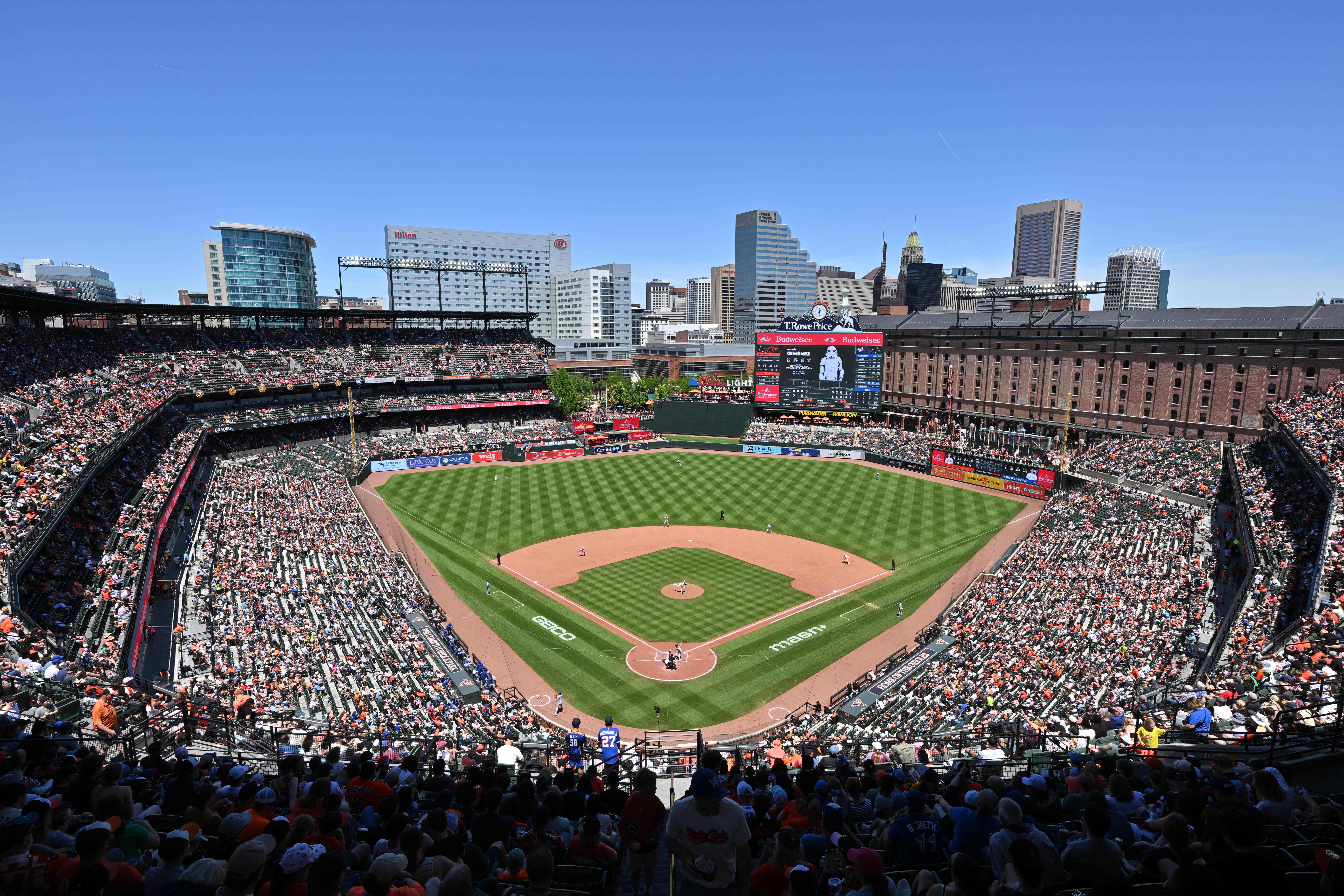
Victor Matheson, a professor of economics and accounting at Holy Cross, locates one key pivot point in Baltimore in 1992: “The sports leagues discovered pretty early on that the premium experiences command premium prices,” he says. “The whole stadium boom in the early 1990s with Camden Yards was an acknowledgement that selling a lot of tickets to bleachers is not the way to make the big money. It’s about selling luxury boxes and premium experiences.”
Providing the opportunity for fans to pay more was the first step. But figuring out how to unlock their willingness to do so was the second one, and that required teams to obtain, maintain and mine customer data. Teams didn’t possess much more meaningful data on their customers in, say, the 1980s than those Roman gladiatorial combat promoters of two millennia ago. But those teams that took a hard, data-based look at their fans quickly realized just how much opportunity was out there.
“There’s been a general shift in the industry, in both sport and entertainment, to using data, using demand and fans’ willingness to pay, to create ticket prices, rather than budgetary concerns or what a ‘fair’ price would be,” says Stephen Shapiro, chair and professor of the David and Nicole Tepper Department of Sport and Entertainment Management at the University of South Carolina. “It’s really been driven by demand-based pricing. There are people out there that are willing to pay, and so you’re seeing sport organizations and concert promoters and venues price accordingly.”
But simply jacking up ticket prices risks running off your loyal customers. So teams and entertainers have employed several different methods to ease fans into paying higher costs for the same tickets.
Variable pricing: After a century-plus of fixed ticket prices for every game, the San Francisco Giants introduced a new strategy about 25 years ago: Higher ticket prices for marquee opponents like the Dodgers and marquee timeslots like weekends; lower prices for less-intriguing opponents and weeknight or weekday afternoon games. Realizing what in retrospect seems obvious — fans are willing to pay more to see a rival than a random opponent — marked the first step in decoupling ticket prices from their moorings.
Dynamic pricing: This strategy is familiar to anyone who’s bought a plane ticket, reserved a hotel room or hired an Uber. The price you pay depends on when you purchase, when everyone else has purchased, how many tickets remain available, how much others have paid … a range of factors that all contribute to your (often highly increased) final cost.
Clark notes that fan demand in the wake of the pandemic allowed promoters, teams and leagues to take advantage of pent-up demand. “People were like, ‘Hey, I couldn’t go to something last summer, I’m going to go to 10 shows this summer,’” he says. “Event operators recognized that there was a diminished resistance to things like surge pricing and dynamic pricing, because they were listing for these (high) prices and the tickets were still being bought.”
Slow ticketing: In contrast to the typical method of ticket selling — dumping an entire arena’s worth of seats on the market at once — slow ticketing unfurls the tickets in tranches to test price points and, not coincidentally, enhance the perception of scarcity. The World Cup and the Los Angeles 2028 Olympic Games have pursued this strategy, releasing blocks of tickets without necessarily informing fans of the specific seats they’re buying while holding back blocks of tickets to sell later.
This sleight-of-hand can backfire if executed clumsily. FIFA’s incredibly complex ticket sales methodology has inspired the attorneys general of New York and New Jersey to open an investigation into ticket sales practices.
"Being honest about ticket sales is not complicated,” New Jersey attorney general Jennifer Davenport said in a statement. “But FIFA has turned buying a ticket to the World Cup into a gauntlet of confusion, fake scarcity, and impossibly high prices — all at the expense of consumers and hardworking New Jerseyans." (And, one could extrapolate, Americans.)
Deceptive business practices notwithstanding, leagues and teams now have deep insight into their customer base’s wants, needs and desires. So with all these adjustable ticket pricing strategies available, the only question remaining for teams is this: How much can we charge?
Turns out the answer to that one has been right in front of them all along.
The secondary market shows the way
You’ve seen those social media posts showing the astronomical get-in-the-door secondary market prices for Super Bowls and World Series games, right? Those are courtesy of ticket brokers who track the massive costs — or, from the other side of the equation, the massive sale prices — for marquee events.
Well, guess what? You aren’t the only one seeing those posts. The teams who put the original tickets on sale are, too. And they realized just how much money they were leaving on the table by not pricing their tickets at the rates the market will bear.
“They've learned from the secondary market that certain events have a really high value, very high above what they might have originally put as the face value price,” says Daniel Rascher, a professor of sports economics and finance at the University of San Francisco. “So now they're trying to capitalize on that by having those high prices from the start, as opposed to selling them at a lower price and then having the secondary market make a bunch of money off of selling them at a higher price.”
Teams and entertainers are happy to acknowledge this reality. Back in 2022, Bruce Springsteen responded to complaints about his dynamically-priced tickets by saying he wanted the band, not secondary market brokers, to get paid: “Why shouldn't that money go to the guys that are going to be up there sweating three hours a night for it?”
More recently, MSG Sports, owner of the Knicks, pointed the finger at brokers as the reason behind high NBA Finals costs. “We understand our ticket prices are high,” a MSG spokesman said in a statement to the New York Times, “but the real issue are the brokers who jack-up prices as soon as tickets are available, and we are taking every possible measure to limit this unfair activity.”
Beneath all this is a simple truth: in a capitalistic economy, you can sell your product for the price others are willing to pay, and concepts such as “loyalty,” “tradition” and “accessibility” don’t need to enter into the equation at all.
“An unpopular, but important, way to look at the increase in ticket prices for major events is that they may, in fact, have been historically underpriced, and now this gap is being narrowed,” David Carter, principal of The Sports Business Group, told Yahoo Sports via email. “This ‘underpricing’ led brokers and the rest of the secondary ticket market to capture the difference between the initial pricing and the actual willingness to pay. Add to this that corporations that rely on these events to conduct business development are less price-sensitive than individual fans, and you have a recipe for sticker shock even though it is merely a case of supply and demand.”
What does this mean for fans?
For those with the disposable income to splurge on high-priced tickets and exclusive experiences, these are good days indeed — the best days, really, that American sports fans have ever enjoyed. Luxury suites, top-tier food and beverage offerings, elite parking … shoot, who cares who wins when you’re enveloped in such decadence?
“As long as you have people who are out there with the cash and wanting to make this an experience, it's hard to see,” Matheson says. “As much as it's easy to hate FIFA, it's hard to argue with a business organization selling their product for the amount that people are willing to pay for it.”
For those not among the high rollers, though, a very different experience awaits, one where they’re paying much more for the same seats … and for everything else, from parking to concessions to souvenirs.
“We’ve created, as prices have gone up and the below-average income family is being priced out, a two-tiered system, where if you have money, you can go to the games, and if you don’t have money, you’ve got to watch it on television,” Shapiro says. “And is that a recipe for long-term loyalty to a team? I don’t know the answer to that, but that would be my biggest concern.”
“The general idea used to be, ‘Let’s get them in the stadium for cheap,’” Matheson says. “That was the deal with concerts as well. Concerts were cheap. But if I can get people to come to the concert, then they'll buy my album. If I can get people to Fenway, then they’ll watch on TV. And so I’ll be developing fans that way. But if every experience is a super-premium experience, there is the real question about whether that ever happens.”
Governments can take action on behalf of consumers, as in New York and New Jersey with FIFA, but that’s a slow and laborious process, and one with little upside to the individual ticketholder, particularly with a here-and-gone entity like FIFA. Shapiro suggests, however, that governments taking a close look at pricing strategies might turn their attention to the buildings in which these high-priced games are taking place.
“If public funding is going towards the venue, then some people might make an argument that it should be accessible to the community of taxpayers. It's not a completely private entity,” he says. “That brings an interesting argument into this whole debate. Is there some obligation by professional teams, particularly those that have public funding going towards them, to make their games more accessible?”
On a more immediate level, the invisible hand — or foot, as the case may be — of the market can have an impact. Regarding the World Cup, for instance, between the unfortunate visual of empty stadium seats and the potential to squeeze money out of fans in attendance, observers believe that ticket prices are trending downward.
“In FIFA's eyes, if you have an opportunity to get somebody into the stadium, they're going to now buy a beer, and they're going to buy a hat, and they're going to buy a jersey, and they're going to engage in other ways of consumption to essentially make (FIFA) more money,” says Mark DiDonato, an assistant teaching professor of sports management at Florida State University. “So it's kind of a wasted seat if they don't have a body in the seat. I think they're going to see that at some point, and the tickets are going to drop.”
Per ticketdata.com, World Cup prices on the secondary market have dropped 17% over the last 60 days, but as the event nears, prices have stabilized. Still, the get-in price to see the United States vs. Paraguay in Los Angeles on June 12 is running at $897, which is actually less than what FIFA is charging. There the get-in price will run you $1,940 — a discrepancy that shows FIFA has overplayed its hand.
So, yes, if you want to badly enough, you can find your way into a World Cup match, or an NBA Finals game, or a Super Bowl. But will you want to pay that cost again? That’s the real question here, isn’t it?
What hope is there for the future?
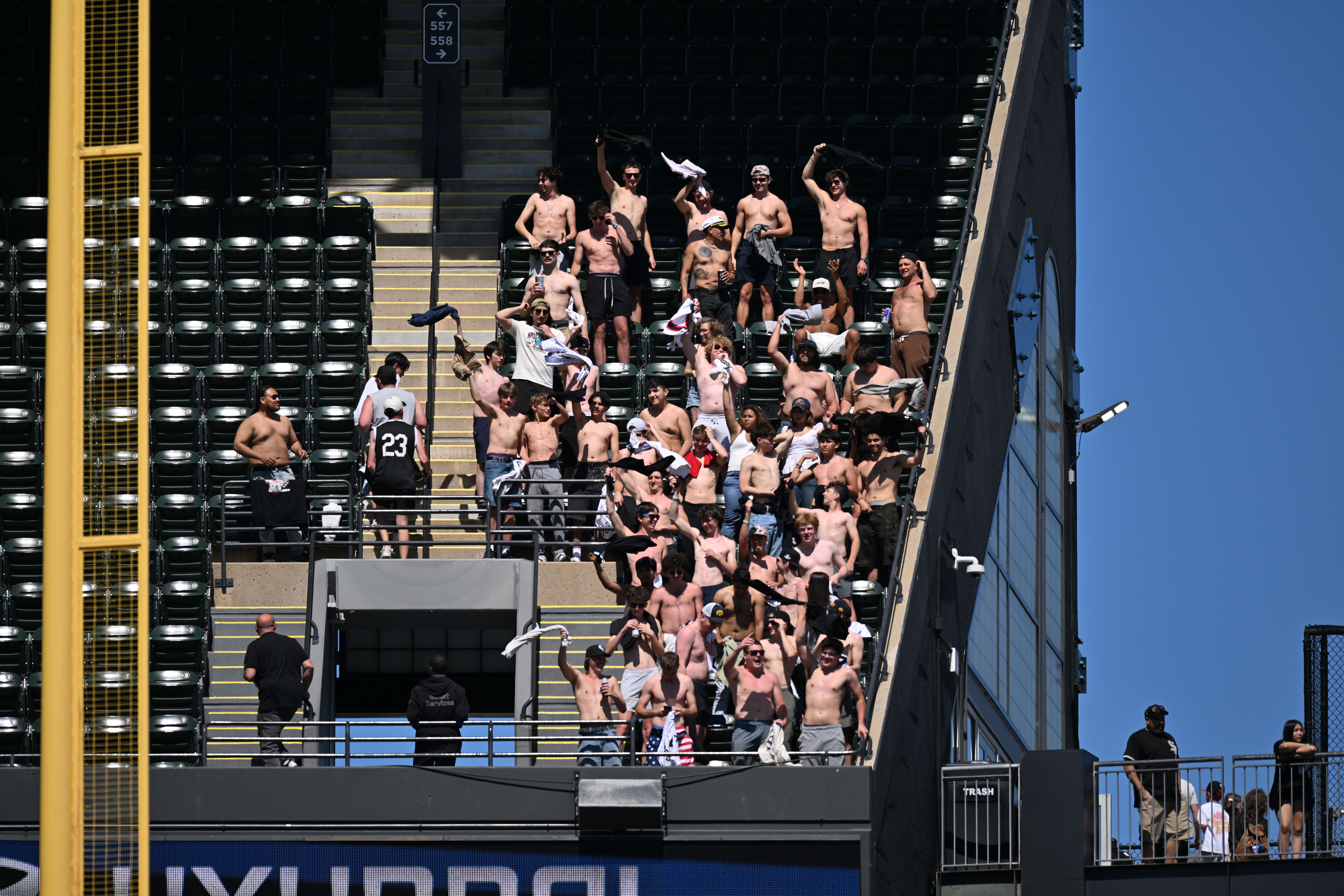
Think back to the way you became a sports fan. If you’re like most, you connected with your favorite sport by attending a game — sitting in the bleachers with a parent or grandparent, watching baseball or football with an older sibling. Sure, maybe you were more focused on the popcorn or the T-shirt cannon than the game, but at least you were in the building. And the atmosphere, the vibe, the energy … it all brought you back, again and again.
Now, though? When the cost of attending a game for a family of four is deep into the multiple hundreds of dollars, to start, some families might just decide that the money they might have spent on a trip to the stadium is better spent elsewhere.
“The sports industry will have to continue to diligently balance immediate revenue generation with the ability to cultivate the next generation of fans and consumers," Carter says. “If they don’t strike this balance, they will either leave money on the table today or tomorrow.”
The short-term drive for massive premium revenue risks alienating, or never even engaging, a generation that, right now, is too young to even go to games on their own, much less afford a ticket. For those kids who may, or may not, be future sports fans — what, exactly, is the endgame for leagues and teams who aren’t connecting with them in the stadium?
There’s no substitute for the primal, visceral thrill of sitting in an audience surrounded by 20,000 or 50,000 fellow fans, hoping and praying for those athletes down there to triumph. Watching a game on TV just isn’t the same … and, worse, for Gen Z or Gen Alpha, one screen is pretty much like another. Why passively watch a ballgame on a screen when there’s so much else on that screen to do?
“Teams are willing right now to forgo those relationships in order for the short-term gain,” Rausch says. “We’re going to have to do something in the future to turn that around.”