

If Brendan Sorsby is able to play for Texas Tech, college sports may as well burn its rulebook
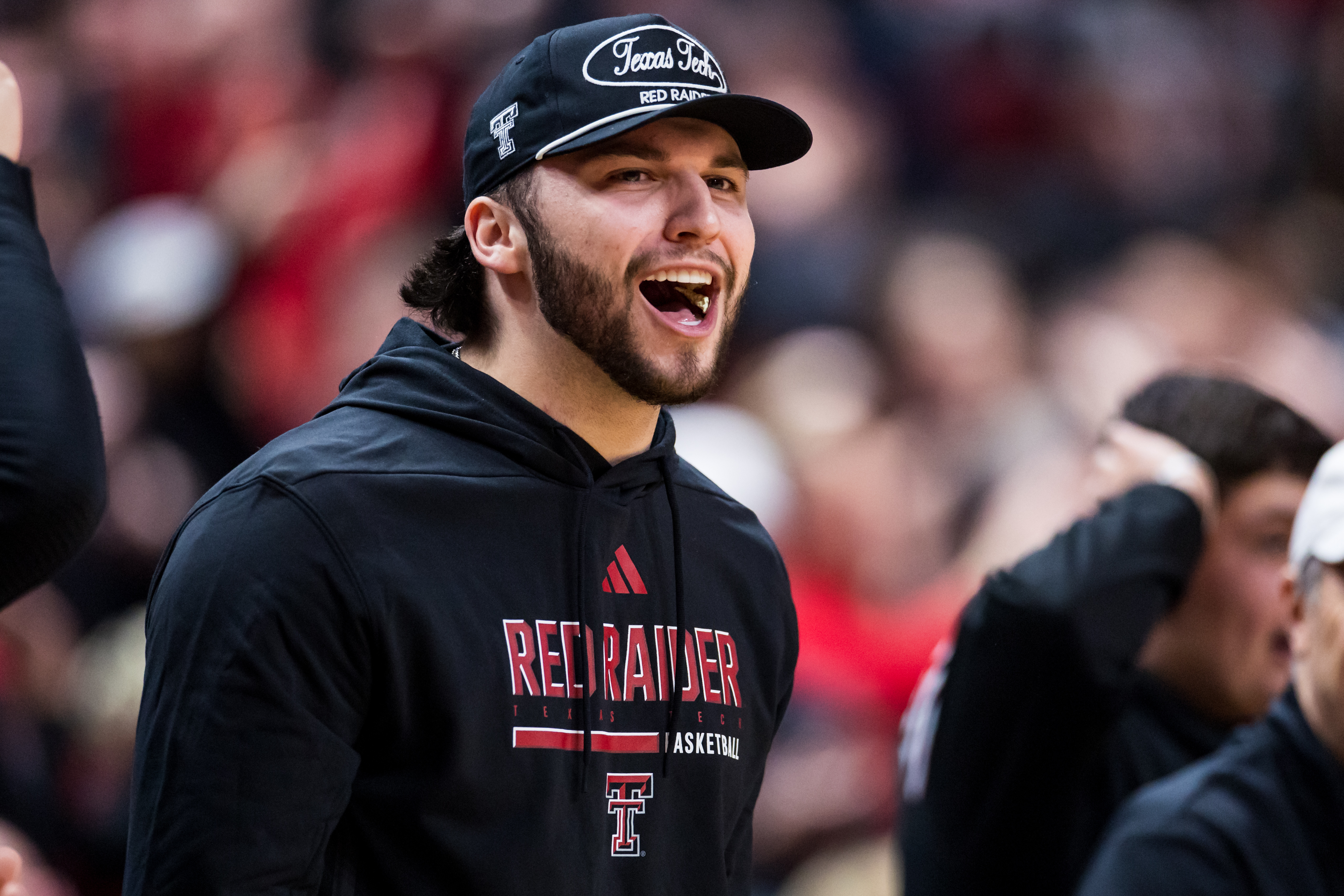
If Brendan Sorsby is allowed to play quarterback for Texas Tech this season via injunction or some other manner of legal sorcery, it will represent the new standard for humiliation in America’s all-out judicial assault on the NCAA rulebook.
Even if you concede the validity of arguments around gambling addiction as an illness and that Sorsby’s mental health would be better served by playing college football — arguments that Texas Tech and Sorsby’s legal representation are making on his behalf — the behavior was so egregious that it’s not really worth debate.
After admitting to making thousands of bets worth more than $90,000, including some on teams he was playing for, three things should be self-evident: The NCAA was correct to rule him permanently ineligible, Sorsby should not play another down of college football and Texas Tech should be embarrassed as an institution that it has not already told him to leave campus immediately and never come back.
This is simple, foundational stuff, and a suspension isn’t going to cut it. Any other outcome than Judge Ken Curry upholding the NCAA’s decision for a permanent ban opens the door to existential disaster — not just for college sports but perhaps all sports. If a line cannot be drawn here when it comes to college athletes gambling on college sports, can it really be drawn anywhere?
Merely given the facts that are now public, the attempt to salvage Sorsby’s college career should shock the senses. Instead, it seems like business as usual in the systemic picking apart of the NCAA rulebook from within, aided and abetted by the schools that claim to want order.
How did it get this way? Where did people in college sports get the idea that it was OK to mangle the rulebook — not because they believe the rules are inherently or morally wrong but because of a momentary imperative to win?
There are flashpoints that led to this inevitable race to the bottom, but the one I keep coming back to happened nearly 16 years ago — a sliding doors moment the NCAA has paid for almost every day since.
Yes, looking back, the $180,000 figure attached to Cam Newton and the greatest individual season in college football history now seems quaint. What would a talent like Newton have been worth on the open, mostly unregulated NIL market in 2026? $5 million? $7 million? Heck, $20 million wouldn’t have been unreasonable given the national title he almost single-handedly delivered for Auburn that season.
But it’s possible for two things to be true at once: NCAA rules that prohibited someone like Newton from being paid his market value were unjust AND creating loopholes in those rules so Newton wouldn’t get pulled off the field in the midst of a Heisman Trophy run and championship season was a Pandora’s Box that accelerated the culture of using legal threats for schools to reverse an outcome they don’t like.
Play 2026 Soccer Pick 'Em with FOX One and make your picks for the world's biggest soccer tournament
For those whose memories are fuzzy, here’s the basic version: When Newton was coming out of Blinn Junior College, his father shopped him around, and specifically to Mississippi State for $180,000. That is not conjecture; it is fact — a fact that led to Auburn declaring Newton ineligible on Nov. 30 of that season.
But Auburn, of course, never intended for Newton to stop playing. It was a procedural move that, as the scandal blew up publicly over several weeks, was part of a deal struck between the NCAA enforcement staff, Newton’s lawyer and then-SEC commissioner Mike Slive to make sure he would be able to play in the SEC championship and ultimately the BCS championship game.
Did the NCAA have hard evidence that Auburn paid Newton? No, but under the rules they really didn’t need it. So instead, they came up with this to avoid an ugly lawsuit: If Newton didn’t know his father was trying to sell him to the highest bidder — and, of course he claimed he didn’t — then the NCAA had to reinstate him.
Not everybody agreed with that rationale. As then-Big Ten commissioner Jim Delany told the New York Times: “Who is closer to a player than the parent?” Delany said. “If that person is found to be shopping that player, I think the rule-of-agency principle could easily apply. I would argue in the environment we’re in that it should apply.”
It was a particularly stinging outcome at USC, which just a few months earlier was hammered over the Reggie Bush scandal when the same principle did not seem to matter.
“I was always told the parent is the child,” then-Trojans athletic director Pat Haden said at the time.
Whether or not you believe the Newton outcome was the right one, this was the primary takeaway from the whole ordeal: Lawyer up, threaten and sue if you have to because everything in college sports is built on a house of sand. It shouldn’t surprise anyone that over the next 15 years, everyone started copying those same tactics. The SEC even hired Newton’s lawyer, William King, and made him in-house counsel.
One case after another built upon the idea that the rules were meaningless, fungible and could be twisted to fit a situation. That meant some bad rules were going to be dismantled, but perhaps some good ones, too. Get denied eligibility after a transfer? Find a friendly attorney general willing to sue the NCAA. Your NIL deal got rejected? Find the nearest court of law. Oh, your basketball player isn’t allowed to play because he got drafted by the NBA and has been a pro in six different countries? Find a friendly local judge to do a solid for his alma mater.
When that becomes the culture — and it is now the defining culture of college sports — we cannot be surprised that we find ourselves in a situation where a high-profile transfer quarterback, with the backing of his coach and institution, is now challenging perhaps the most incontrovertible rule in sports: Don’t bet on your own games.
I’m not trying to draw any equivalence here between Newton being paid and Sorsby gambling or anything that has happened in between.
But this is where it leads when you’re making it up as you go along, when you chicken out of applying a rule that you’ve all agreed to for the sake of expedience. Even if the rule is a bad one — and ultimately most people now believe someone like Newton should obviously be paid what he’s worth as a college athlete — in many ways, that was the moment that broke the NCAA.
Now we’ll see if yet another judge is willing to apply the finishing blow. If Sorsby plays for Texas Tech next season, everyone can turn out the lights. Whatever’s left of law and order in college sports is over.