
With Protect College Sports Act under scrutiny, NIL deals with 'associated entities' creating confusion
DENVER, Co. — On page 25 of the revised 47-page Protect College Sports Act — the newest college sports legislation — one can find an interesting section.
In all caps and bolded, Section 114’s title reads as follows:
PROHIBITED COMPENSATION AND AGREEMENTS.
Over the next 39 lines, language details an overshadowed portion of the legislation that, if adopted as written, stands to dramatically reshape the college athletics compensation market.
At least that’s how some are interpreting it — including a few here in the Mile High City, where Division I conference commissioners are holding their annual meetings.
Ahead of one of the most anticipated congressional events in college sports history on Thursday — a committee amendment session and vote to potentially send the bill to the Senate floor — many within the industry believe Section 114 of the Protect College Sports Act may limit the amount of money that athletes are currently receiving, potentially by hundreds of millions of dollars.
Those include athletes themselves. Nineteen athletes representing seven different sports covering 14 Division I conferences submitted a letter on Tuesday to lawmakers detailing how Section 114 “would have a severe negative impact and greatly inhibit student-athlete compensation in general,” wrote Samuel Edwards, a Michigan State football player and athlete representative on the DI Board of Directors who penned the six-page note. Four of the athletes are members of the presidential committees on college athletics.
Though interpretations differ over the ambiguous nature of the language, the bipartisan bill introduced by Sens. Ted Cruz and Maria Cantwell appears to close a lucrative loophole that schools are using to pay their athletes beyond the revenue-share cap allotted to them. The bill’s text prevents athlete NIL deals struck with “associated entities” from resulting in “compensation in an amount that would circumvent or result in the institution exceeding the revenue-share cap.”
For a year now, schools have used multimedia rights partners, corporate sponsors and apparel brands — all deemed as “associated entities” because of their contractual relationship with universities — to intentionally circumvent the cap. Universities are redirecting revenue, traditionally intended for the athletic department, to their rosters in the form of manufactured NIL opportunities with multimedia rights partners like Learfield and Playfly and brands like Nike and Adidas — all in an effort to exceed a cap in a hotly competitive recruiting environment.
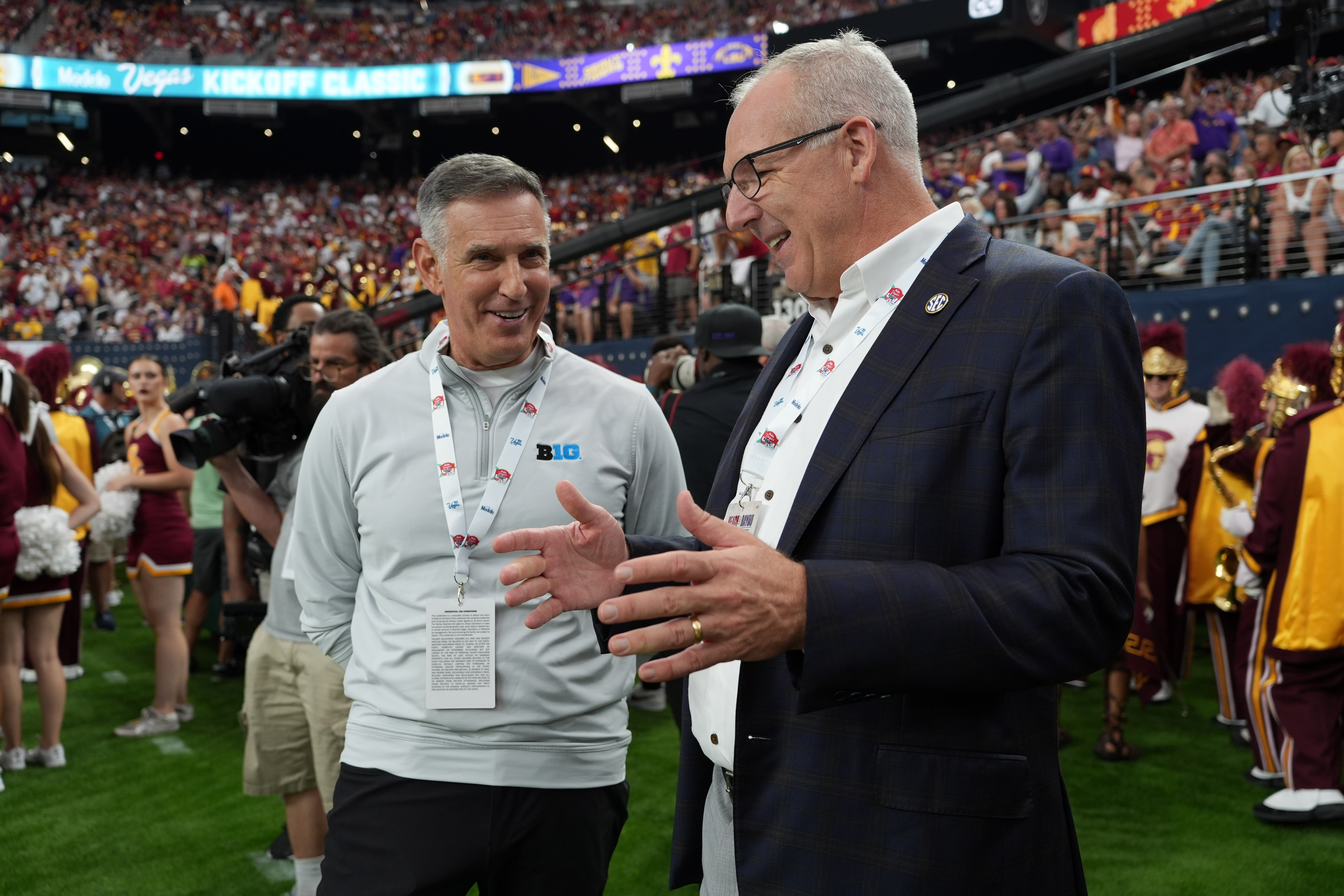
Such a loophole has meant millions more going to athletes outside of the allotted revenue share pool, especially from SEC and Big Ten schools, whose big brands are creatively using their valuable resources to funnel third-party cash to athletes in a way that many athletic directors describe as “money washing.” The concept even found its way into President Donald Trump’s executive order. He referred to it as “fraudulent NIL schemes.”
The above-the-cap spending is significant.
The College Sports Commission, the industry’s new enforcement entity charged with scrutinizing such third-party compensation, has approved nearly $300 million in third-party athlete NIL deals since its inception last year — a majority of which is believed to be from contracts involving associated entities. More than $200 million in additional compensation has either been rejected or is under review within the CSC’s system — a majority of it, too, believed to be from associated entities.
This means athletes have submitted more than $500 million in above-the-cap cash to the CSC — a figure that will only grow (most men’s basketball players haven’t yet submitted their NIL contracts).
In fact, by the end of summer, the above-the-cap NIL deals submitted to the CSC “will come close to matching” compensation distributed from schools directly through revenue-sharing, wrote Edwards.
If true, that figure would exceed $1 billion.
Is that money at risk if the bill becomes law?
NCAA, Big Ten ‘concerns’ raised
In a presentation shown to conference commissioners here in Denver, the NCAA made clear that the association interprets Section 114 of the bill as requiring that associated entity deals count toward the school revenue-share cap, according to those who saw it.
Several Big Ten university presidents were planning, if they haven’t already, to submit letters of “concern” to lawmakers citing the associated-entity issue. The National Urban League, a historic civil rights organization, submitted a letter to Democrat lawmakers earlier this week about the portion of the bill, claiming it “strips wealth from college athletes.”
But some support a measure that they believe creates more of a “hard cap” to level the compensation landscape and bring Big Ten and SEC schools closer to the pack. The two leagues are believed to be responsible for more than 75% of submitted above-the-cap spending. At just $20.5 million last year, the cap sits dramatically beneath a market that, at many of the blue-blood programs in the SEC and Big Ten, has exceeded $50 million in all-in athlete compensation.
The Protect College Sports Act features various concepts seemingly intended to prohibit the industry’s Goliaths from pulling too far away from the Davids. Lawmakers have been open about this. On the Senate floor on Tuesday, Cruz himself told the body of lawmakers, “The wealthiest conferences continue to consolidate power and resources while many mid-major programs increasingly serve as feeder systems for the sport’s biggest brands.”
Mit Winter, a sports law attorney at Kennyhertz Perry LLC and an expert on the NIL space, says that it’s clear now that the Protect College Sports Act is “being outed as mostly an attempt to rein in the Big Ten and SEC, cloaked in the veil of ‘saving’ college sports.”
In a not-so-surprising revelation, the two conferences have publicly opposed a bill that they believe unnecessarily targets them — by prohibiting their future expansion; offering an avenue for conferences to pool media rights, which they oppose; an “unfunded mandate” that requires schools earning at least $80 million in revenue to maintain non-revenue sports roster/scholarship levels; and private-right-of-action and state preemption provisions that may limit the bill’s antitrust protections over the one-time transfer and five-year eligibility standards.
Now, there is perhaps another issue: limiting their ability to outspend all others by using “associated entities.”
Born out of the NCAA’s landmark House settlement, the term “associated entity” — spelled out in the bill — is typically defined as school-affiliated brands, sponsors, donors and businesses whose purpose is to support a school by creating or identifying NIL opportunities. While the House settlement ushered in direct compensation from schools to athletes in the capped system, it also provided athletes with an ability to earn additional dollars outside the cap through NIL endorsement and marketing deals — as long as they met certain legitimacy thresholds in the College Sports Commission’s NIL Go clearinghouse.
The clearinghouse’s standard is higher for NIL deals made with associated entities. But some believe that Section 114 of the bill paves the way for that standard to increase, requiring all NIL-related deals with associated entities to be counted against the revenue-share cap, even if they meet clearinghouse thresholds for a business purpose and range-of-compensation.
Such a concept would eliminate much of the “pillar of the settlement,” said Jeffrey Kessler, one of the House plaintiff attorneys who struck the settlement with the NCAA and conferences. Athletes would be restricted to earning only the school revenue-share cap amount, which is determined by 22% of an average of the 68 power school athletic department revenues.
“The cap would have to be a lot higher,” Kessler told Yahoo Sports.
Kessler shoots down the notion that specifically compensation from multimedia rights partners should be counted against the cap. In fact, he is in the midst of challenging the College Sports Commission for its rejection of associated entity deals through the system, arguing that multimedia rights partners should pass through the clearinghouse with little scrutiny — in many ways, the exact opposite approach taken by the bill.
“Multimedia rights partners have been around for decades,” Kessler said. “What does it mean to cut them out? Who does that help? It doesn’t help the schools in the Big 12 and ACC. They need those partners to help them generate deals.”
‘Not a normal organic market’
After years of using booster-backed NIL collectives to pay athletes, schools pivoted last year to more legitimate options in an attempt to easier gain them approval through the new clearinghouse.
Enter: multimedia rights partners, corporate sponsors and apparel brands — outfits that held pre-existing contractual relationships with athletic departments.
Multimedia rights partners, already paying universities millions in licensing agreements to sell their intellectual property, are arranging deals for athletes through their corporate sponsors — money that previously went directly to athletic departments. Apparel brands, some of which distribute upwards of $15 million annually to a partner school, are now rerouting the cash to rosters, too.
For instance, 18 Nebraska football players submitted NIL contracts to the College Sports Commission worth more than $7 million earlier this spring from the school’s multimedia rights partner Playfly.
“The NIL market is not a normal organic market," CSC CEO Bryan Seeley said earlier this spring. "It is a market in which schools are manufacturing NIL for their student-athletes and they are doing it in such a way that they are paid by entities affiliated with the schools or acting at the direction of the school."
The natural workaround has been a boon for athletes.
Many schools are offering athletes a compensation package that includes a portion of direct school revenue share within the capped system and a portion of third-party NIL compensation outside of the cap. During the January football portal, Seeley says there “no question” that agents demanded guaranteed third-party NIL for athletes and “schools felt pressure to guarantee those things, even though such guarantees are not within the rules.”
But not all third-party NIL deals derive from “associated entities.” A car dealership with no booster connection or contractual relationship with the school stands as one example. There are plenty of others: an apparel brand such as Nike striking a deal with an athlete at a school with which they are not partners, or a national brand with few ties to the school such as Coke or Pepsi directly partnering with an athlete.
However, the bill’s language is a bit gray and often interpreted differently. In a letter to his university presidents and chancellors last week, SEC commissioner Greg Sankey cited these issues. “Revisions are needed to effectively tighten rules and enforcement around third-party NIL because the current system allows cap circumvention via third-party NIL deals,” he wrote.
But the intention of the language was made clear to college stakeholders in conversations they’ve held with Cruz, Cantwell and their staff. The goal is to eliminate the more fraudulent NIL deals orchestrated by schools through their affiliated businesses and brands.
The overspending on football and men’s basketball impacts resources to non-revenue programs, so the bill attempts to stop the “arms race,” Cantwell has said publicly.
Many administrators believe that a stricter cap must come with an increase in the school revenue-share cap, which moves to $21.3 million next year. The bill allows for such. Power league commissioners met in Charlotte last week and discussed long-term solutions to the current situation, including an eventual cap increase.
It won’t be easy. The cap, a central part of the NCAA’s House settlement, can only be raised if the settlement’s six defendants — each of the power leagues (including the Pac-12) and NCAA — agree to such a move. The House plaintiff attorneys and the magistrate judge overseeing the settlement must approve any such revisions — something made more difficult if there is no unanimity among the defendants, said Kessler.
“It would be a total change to the settlement for some conferences to have greater caps than others,” Kessler said. “I’m not saying we wouldn’t support any increases in the cap from the SEC and Big Ten, but I would assume the others would object.”
Does the bill have a chance?
In calls and memos to their administrators this week, Sankey and Big Ten commissioner Tony Petitti expressed disappointment in the revised Senate bill released Monday evening.
Few if any significant changes were made that they requested over the last two weeks, according to a letter that several Big Ten presidents individually planned to send to lawmakers this week. The letter highlighted the associated entity issue and expressed “concern” over the concept.
“If unaddressed, the application as written will result in denying potentially hundreds of millions of dollars to student-athletes, primarily those who play the sports that generate the most revenue — football and men’s basketball,” one copy of the letter said.
The bill takes center stage on Thursday at an amendment session — it is referred to as a “markup” — before the 28-person Senate Commerce Committee whose members will put forward bill revisions before lawmakers adopt or reject the “marked up” legislation. A simple majority, or 15 supportive votes, is necessary to adopt the bill through the committee. There are 15 Republicans and 13 Democrats on the committee.
If adopted, its next step is potentially the Senate floor, where 60 votes are needed in a chamber with 53 Republicans.
The number of Democrats voting for the bill in committee will offer a window into the legislation’s chances of passage on the floor. Already, some Republicans are against the measure, including Sen. Tommy Tuberville (R-Ala.), who from the Senate floor on Tuesday announced that he would not support the legislation.
However, plenty of entities are supportive. More than 20 athletic conferences and more than 225 universities expressed some level of support for the work or the legislation itself, and so too did players associations from the NFL and NBA as well as the NFL and MLB themselves.
This week, lawmakers and lobbyists worked to develop amendments to be presented at Thursday’s hearing. Those were submitted to the committee on Tuesday. The amendments range widely and the most notable ones are available here.
Meanwhile, on Wednesday here in Denver, conference commissioners debated on an assortment of items: issues with the House settlement, the new age-based eligibility rule expected to be adopted next week, an update on NCAA tournament expansion, the NCAA’s new tampering framework and College Football Playoff expansion.
But the Senate bill trumped the rest.
In fact, on Tuesday here, Cantwell and Cruz spoke virtually to the entire group of the 32 Division I commissioners. During the call, Cruz offered to them a message that he’s delivered to many others over the last few weeks: This legislation has the best chance to become law of any previously introduced — and there won’t be another anytime soon.
Said Cruz: “This is the last train leaving the station.”