
MLB Draft 2026: Top 50 draft prospects, starting with Roch Cholowsky, Grady Emerson and Vahn Lackey
Welcome to the 2026 MLB Draft.
A yearlong process that appeared to be counting down to an inevitable conclusion has featured some intriguing late drama. For a long stretch, UCLA shortstop Roch Cholowsky sat comfortably atop the 2026 class as the prohibitive favorite to be the first overall pick. Teams that tumbled down the standings in 2025 were said to be heading toward “Roch bottom.” When the 102-loss Chicago White Sox won the top pick at the draft lottery in December, it wasn’t long before general manager Chris Getz was fielding questions about Cholowsky, which he, predictably, professionally and perhaps presciently, deflected.
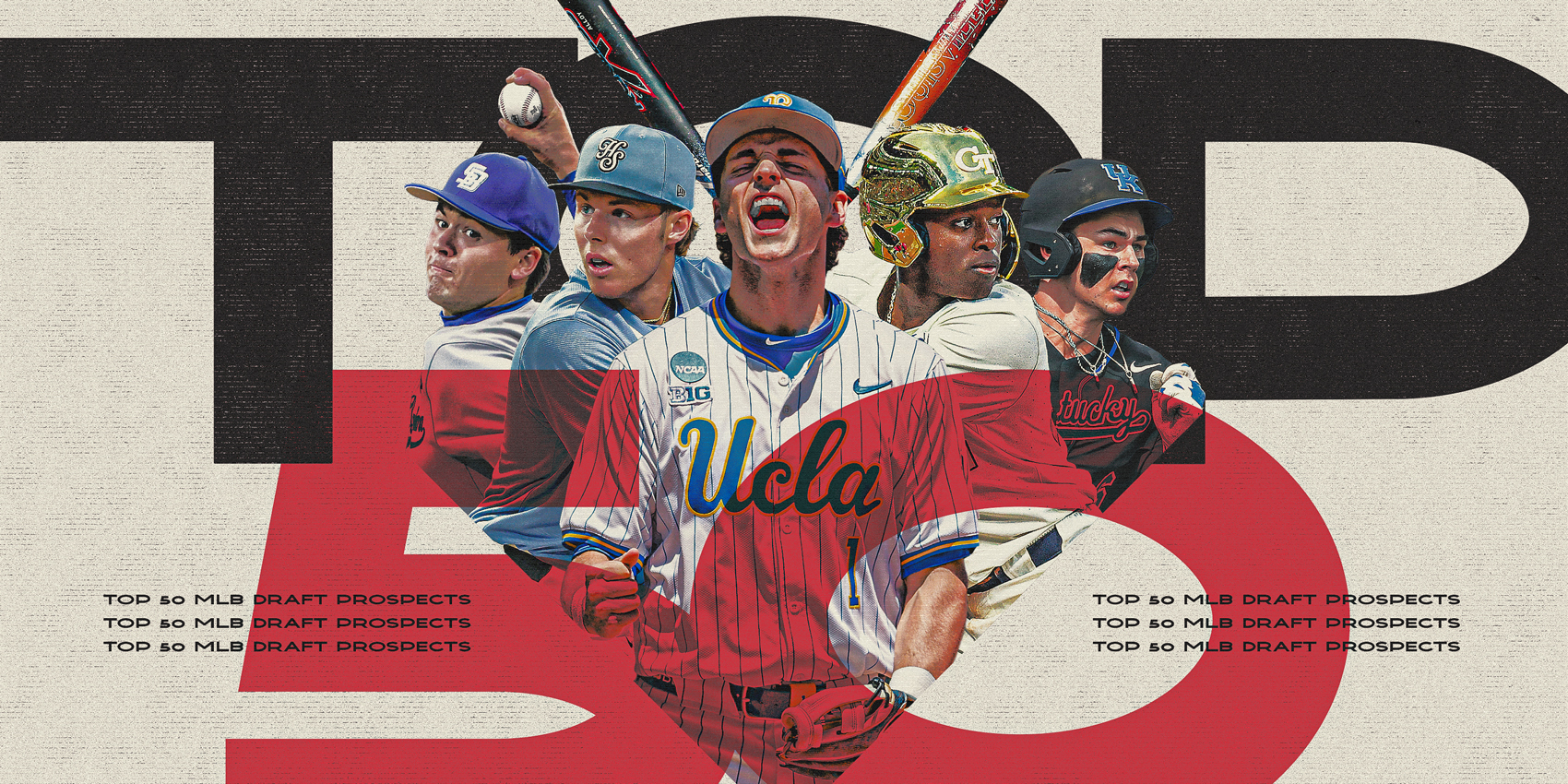
Fast-forward eight months, and Chicago’s choice atop the draft doesn’t seem quite so obvious. While Cholowsky had another excellent season for the Bruins, two other prospects — Texas high school shortstop Grady Emerson and Georgia Tech catcher Vahn Lackey — have joined him in what is considered by the industry to be a clear-cut top three, rather than a tier of one. In fact, White Sox scouting director Mike Shirley publicly confirmed that this is the trio Chicago is contemplating as the draft approaches.
Beyond that top three, chaos reigns. Another group of a half-dozen or so players follow as likely top-10-to-15 picks, but it gets hazy in a hurry after that trying to identify slam-dunk first-rounders. And as is the case every year, medical concerns and the signability of high school prospects are the great unknowns behind the scenes that can significantly impact how the draft unfolds.
Clarity is nearly here, however. The White Sox will be on the clock Saturday in Philadelphia to kick off one of the first official events of All-Star week. The first 10 picks will be broadcast on NBC/Peacock starting at 1:30 p.m. ET, and the remainder of the first round (picks 11-40) will be on MLB Network. Picks 41 through 135 (the end of the fourth round) can be watched on MLB.com starting at 4:30 p.m. Rounds 5 through 20 will take place on Sunday beginning at 11:30 a.m. ET, also viewable on MLB.com.
This is my third year putting together a Top 50 draft prospect list for Yahoo Sports, and my rankings are once again informed by a combination of my own evaluations and intel gathered from major-league sources. Because I’m not releasing a traditional mock draft, I also want these rankings to serve as a rough preview of when players are expected to hear their names called on draft day, so I’ve organized the list into tiers to convey the buckets of similar players who are being debated by scouts and front office officials in the days leading up to the draft.
In 2024, players from my Top 50 accounted for 37 of the first 50 picks and 42 of the first 60. Last year, 43 players from my rankings were selected in the first 50 picks, with another four drafted in picks 51-60. Matching those totals in a murky class such as this year’s seems unlikely, especially with so much variance expected beyond the top handful of picks, but I’m excited to see how it all unfolds.
To the Top 50 we go.
The Big Three
1. SS Roch Cholowsky, UCLA
Plenty of teams were eager for Cholowsky to start his professional career three years ago, as his advanced right-handed bat and top-notch defense at shortstop at Hamilton High School in Arizona made him one of the more exciting prep players in the 2023 draft. But Cholowsky was not satisfied with his late-first-round projection and committed to elevating his stock further at UCLA. His introduction to college baseball was sobering, as he started mostly at third base and showed well for a freshman (.899 OPS), but the Bruins suffered through their worst season in years, going 19-33 and finishing last in the Pac-12 in its last year of existence.
Undaunted, Cholowsky went to work. Alongside a deep group of talented players in his recruiting class who took their lumps as freshmen, Cholowsky led an astonishing UCLA resurgence as a sophomore, making the program’s first trip to the Men’s College World Series since 2013. That season, Cholowsky hit .353/.480/.710 with 23 home runs and just a 9.3% strikeout rate while starting every game at shortstop, where he made highlight plays look routine.
Restoring UCLA to college baseball’s center stage and raising his individual stock to new heights made Cholowsky the prohibitive favorite to be the first overall pick entering his junior season. But it also might’ve set unreasonable expectations for what Cholowsky could accomplish in his draft year. In assuming an uninterrupted upward trajectory, there was thought that Cholowsky could somehow put up even bigger numbers as a junior for a loaded Bruins team with its sights set on a national championship. And though UCLA held the top spot in the polls for the entirety of the regular season, they crashed out at home in the regionals, and Cholowsky’s stats regressed rather than skyrocketing. It was a strong season by any other player’s standard — 1.086 OPS, 21 homers, stellar defense at shortstop — but it wasn’t the legend-solidifying and top-pick-securing finale that many envisioned.
Nevertheless, Cholowsky maintains a loose grip on the top spot in my rankings. Reasonable minds can poke holes in his profile, wondering if his hit tool will be exposed at the next level after he beat up on Big Ten competition rather than thriving in a better conference. And it’s not unfair to call his junior season a disappointment based on the lofty hype going in. Still, I’m confident in Cholowsky’s ability to make the necessary adjustments at the plate to reach his All-Star upside and take comfort in the knowledge that he’ll provide elite defense at a premium position along the way. There’s no wrong answer among these top three players — which is better news for the Twins picking third than for the White Sox picking first — but Cholowsky still looks like the best-in-class to me.
2. SS Grady Emerson, Fort Worth Christian School (Texas)
Just as Cholowsky separated himself from his collegiate peers for the majority of this draft cycle, Emerson has done the same among the 2026 high school class. As a shortstop from the Dallas/Fort Worth area who has been projected as a top pick since he was an underclassmen, Emerson has had a tough time escaping the superstar shadow of Bobby Witt Jr., though those obvious parallels are a compliment to Emerson as much as they invite unrealistic pressure to become a perennial MVP candidate.
While Emerson doesn’t presently demonstrate the same outlier power and speed that Witt did as an amateur, there are parts of his game that are ahead of where the Royals’ shortstop was as a teenager. Emerson has the advantage of being left-handed — which teams value more than ever nowadays — and he exhibits an extremely polished approach and smooth swing that have many evaluators calling him the best pure hitter in the class. As is the case with most high school bats, Emerson’s ultimate power potential will depend on how he fills out his 6-foot-2 frame, but he already hits the ball hard with frequency, lending optimism that he can access more slugging in the future as he dials in his approach. He might not ever appear toward the top of the sprint-speed leaderboards like Witt, but Emerson is a plus runner, so he could be a factor on the basepaths in the future as well.
His defensive outlook is a more interesting discussion point. Many scouts view Emerson as a no-doubt shortstop long-term, a line of thinking that strengthens his case as the best overall player in the draft, as that puts him on par with Cholowsky as a defender but as a left-handed bat with even more upside in a lot of teams’ eyes. However, others believe he doesn’t have quite the quick-twitch actions to stick at short and might just outgrow the position, in which case his bat would need to clear a higher bar at third base in order for him to be an impact player.
As the lone high schooler among the top three, Emerson has developmental time on his side, but that also means he has more to prove — performing at scattered summer showcase circuit events is not the same as starring at the highest level of college baseball for multiple years. Still, it’s no accident that a lot of the best players in the league, past and present, were signed out of high school, so if Emerson ends up being Chicago’s pick at No. 1, a lot of the industry would nod and say “makes sense.”
3. C Vahn Lackey, Georgia Tech
Lackey’s journey to the top tier of this class is a wonderful contrast to the high-profile paths taken by Cholowsky and Emerson. As a high school senior, Lackey was ranked barely inside the top 200 players in the state of Georgiaby Perfect Game, but he has since exploded out of obscurity to become one of the most impressive catching prospects in recent memory. It didn’t click right away in college; Lackey showed some interesting contact skills and athletic actions behind the dish as a freshman in 2024 but posted a .711 OPS in 103 plate appearances. And he didn’t perform much better the following summer, hitting .196 across 41 games in the Northwoods League.
As Lackey gained strength and got more reps, his ability on both sides of the ball began to shine through. It started to become clear that he was not just a good athlete for a catcher but often the best athlete on the field, one who happened to be happy at the game’s most demanding position. Then the production started to follow. As a sophomore, Lackey’s bat took a big jump (.921 OPS), his defense continued to progress, and his super-strong arm seized attention.
After he played for USA Baseball’s collegiate national team last summer, evaluators began to whisper about Lackey’s potential as a first-round pick. Such speculation continued into the fall, when scouts started to suggest they might prefer Lackey to his highly accomplished teammate Drew Burress. That notion seemed somewhat preposterous at the time, considering Burress’ résumé, but proved spot-on come spring. Lackey delivered a humongous junior season for the Yellow Jackets, his powerful, right-handed swing laying waste to ACC and nonconference arms to the tune of .397/.519/.772 with 20 homers and more walks (50) than strikeouts (38), with 15 stolen bases to boot. Even in a historically productive Georgia Tech lineup, Lackey stood out, solidifying his unexpected case as the best player in the class.
Lackey’s chances of going first overall are uncertain; industry speculation leans toward more of a toss-up between Emerson and Cholowsky for Chicago. But this is a potential franchise catcher who has gotten so much better in such a short amount of time that it’s incredibly exciting to think about the next chapter of his development. His story might just be getting started.
The best pitcher in the draft
4. RHP Jackson Flora, UC Santa Barbara
Like second overall pick Tyler Bremner last year, Flora enjoyed a gradual evolution in Santa Barbara from a lanky, projectable right-hander who arrived on campus without much fanfare to a full-blown college ace who won’t wait long to hear his name called on draft day. Flora’s sophomore season as Bremner’s co-ace was good enough to elevate him into the first-round mix, but his junior season — an utterly silly 1.05 ERA across 102 innings with 133 strikeouts to just 32 walks and 55 hits allowed — was otherworldly, vaulting him into a tier of his own as the best pitcher this class has to offer.
Following in Bremner’s footsteps, Flora embraced the environment at UCSB known for fostering pitching development and worked relentlessly to maximize his potential. He has done well to fill out his previously quite skinny 6-foot-5 frame, and he has done a better job of holding velocity deep in games, with his four-seamer averaging 96 mph. Beyond the heater, Flora deploys a barrage of brilliant breaking balls, including a sharp, upper-80s slider. He can really spin it and has good command of all of his pitches. Most obvious when you talk to Flora is his passion for finding the next thing that can help him become even better, striking an excellent balance between confidence in his current strengths and ambition to chase the next upgrade. If I were the Giants picking at No. 4 and the consensus top three names were already taken, I’d be thrilled to make Flora, a native of nearby Pleasanton, California, my first pick. We’ll see if Buster Posey and Co. concur.
The mold-breaking dynamo
5. OF Drew Burress, Georgia Tech
Save for Cholowsky, no hitter in this draft has put together as comprehensive of a collegiate résumé as Burress. He had late helium as a possible early draft pick out of high school in 2023 but made it to campus in Atlanta, where he spent the past three years wrecking ACC pitching, rewriting the record books for a program that has produced dozens of big leaguers and finding time to complete his degree in business administration along the way. His freshman season was particularly sensational, as Burress clubbed 25 homers with a 1.333 OPS — marks he couldn’t quite match his next two seasons — setting the tone for a memorable career as the Yellow Jackets’ every-day center fielder. Lackey leapfrogged his teammate by the end of their junior years in terms of draft stock, but it was Burress whose total contributions put him in the inner-circle of Georgia Tech greats. In total, he hit .357/.484/.720 with 60 home runs across 886 plate appearances, with more walks (160) than strikeouts (122) and 189 RBI in 179 games.
What makes Burress so different from the collegiate megastars of years past? He’s listed as 5-foot-9 on Georgia Tech’s roster, but anyone who has seen Burress in person will tell you he’s likely an inch or two shy of that. It’s not that shorter players haven’t become big-league stars — from Mel Ott to Joe Morgan to Tim Raines to Dustin Pedroia to Jose Altuve to Jose Ramirez to Mookie Betts — but Burress’ specific demographic as a right-handed-hitting center fielder of his stature? That has minimal precedent. The only examples of such a player with star-level production in modern baseball history are Hack Wilson, Dom DiMaggio, Curt Flood and Kirby Puckett. That quartet exemplifies the extreme rarity of this genre of player. Also: It has been a while.
To be clear, this brief history lesson is meant not to cast doubt on Burress’ chances of fulfilling his star potential at the next level but rather to highlight the rarity of his profile. If anything, it makes what Burress has already accomplished that much more impressive. And in a draft loaded with uncertainty, his plus tools across the board, three-year track record and outstanding makeup — everyone loves this kid — make Burress exceptionally alluring, no matter his height.
High school bats with sky-high potential
6. OF Eric Booth Jr., Oak Grove High School (Mississippi)
Built like a five-star football recruit slated to play running back or safety in the SEC — Booth’s father was a star speedster on offense and in the return game at Southern Miss in the ‘90s — Booth Jr. has a case as the best athlete in this draft, giving him a huge ceiling if he is able to hone his skills in tandem with his incredible physical traits. He’s one of the fastest players in the class, with a lightning-quick bat from the left side, a fantastic power-speed foundation that profiles well in center field. Booth isn’t all projection, either, as he has already demonstrated a solid approach and knack for making contact, first on the summer showcase circuit against top arms from around the country and then this spring, when he demolished the local competition his senior year.
The biggest question is whether his swing, which features an unusual amount of movement in his hands as he loads, will work at the next level in its current form, both from a timing standpoint and in terms of achieving desirable batted-ball outcomes (i.e. pulled fly balls) to make the most of his raw power. There’s untapped potential beyond the bat as well, as Booth is still improving in the outfield and on the basepaths, and his wheels give him a great chance to develop into an impact defender and baserunner at the next level. Booth’s power-speed upside is rare in this class, which is why he could be the second high schooler to hear his name called.
7. SS Jacob Lombard, Gulliver Prep (Florida)
The son of Tigers bench coach George Lombard and younger brother of top Yankees prospect George Jr., Jacob offers the most prominent boom-or-bust profile among the upper-echelon players in this class. An outstanding athlete with spectacular speed, he preferred soccer for much of his youth — a rarity as a second sport among top baseball prospects — before the bloodlines redirected him to the diamond, where he blossomed into one of the top prep shortstops in the country. His explosive quickness and baseball IQ from growing up around the game have made him a terrific defender at shortstop and a game-changer on the basepaths.
As for the bat, it’s complicated. While he also has premium right-handed power and made progress this spring against solid competition in south Florida, Lombard struck out a lot over the summers in a sizable sample of at-bats against quality arms. Some teams view his paltry contact rates as untenable moving forward, while more bullish clubs believe an athlete of Lombard’s caliber and with his baseball roots has a great chance to make the adjustments necessary at the next level. There’s a ton of potential, but patience might be required here.
The best prep pitcher in the draft
8. LHP Gio Rojas, Marjory Stoneman Douglas High School (Florida)
Rojas grew up in Colorado, but his family moved to Florida to put him in better position to chase his baseball dreams. As luck would have it, his aunt lived minutes from a high school that has churned out several future big leaguers, providing the perfect spot for Rojas to continue his progression as a talented young lefty. Stoneman Douglas has produced several draft picks over the years, from Anthony Rizzo to Jesus Luzardo to Roman Anthony, but Rojas is in position to be the earliest-selected Eagle yet.
The ease with which Rojas unleashes high-90s heaters is almost startling; some of the best prep hitters in the class told me that facing him was an unrivaled challenge on the showcase circuit. The low-effort nature of Rojas’ delivery sets a misleading tone before the ball explodes out of his hand and darts toward the strike zone. And gearing up for the fastball gets you only so far, as Rojas’ wicked sweeping slider generates plenty of whiffs and weak contact. He also tunnels the changeup off the fastball well, and there’s still room for growth with that pitch as he faces tougher right-handed hitters in pro ball. Some teams won’t bother considering a high school pitcher this early in the draft, but for those unbothered by the associated risk, Rojas is a fantastic option.
The no-doubt catcher with big power
9. C Ryder Helfrick, Arkansas
His athleticism and hit tool aren’t close to Lackey’s, but Helfrick’s ultra-advanced glove and right-handed juice make him the heavy favorite to be the second catcher off the board, even ahead of SEC rival and Golden Spikes Award winner Daniel Jackson. Known more for his right-handed bat as one of the top prep catchers in the 2023 draft class, Helfrick’s stock skyrocketed during his three years in Fayetteville, thanks to the enormous progress he made behind the dish, where he now grades out as an elite framer and blocker and has always boasted a strong arm to control the running game.
At the plate, Helfrick overcame a challenging freshman season (.642 OPS) to become a reliable source of slugging, tying for the home run lead in the prestigious Cape Cod League in 2024 and launching 33 long balls across his sophomore and junior seasons. The batting average might not always be pretty, but Helfrick’s power and patient approach should profile well in the modern game. In tandem with his excellent glove, that makes him an upper-echelon prospect in this draft.
Tier 2 college infielders
10. SS Tyler Bell, Kentucky
In 2024, the Rays drafted Bell 66th overall out of an Illinois high school but were unable to come to terms with him on a signing bonus, which sent the switch-hitting shortstop to the SEC to raise his stock for two seasons before he resurfaced as a draft-eligible sophomore. Mission accomplished on that front, as Bell played his way into the top of the first round this spring, even while battling through a shoulder injury suffered in Kentucky’s season opener. Only Florida’s Brendan Lawson (a projected top-10 pick in 2027) had a higher OBP than Bell (.510) among every-day players in the SEC, and his smooth glovework at shortstop provides value on defense as well.
11. 2B Chris Hacopian, Texas A&M
Hacopian spent two years putting up monster numbers at Maryland, where his dad, Derek, and older brother, Eddie, both played. With little else to prove against Big Ten pitching, he then transferred to A&M for his draft year to demonstrate that his advanced bat could shine against improved competition. Hacopian generally succeeded in that effort, though he regressed as a defender, splitting his time between second base and DH with the Aggies after manning third and shortstop with the Terps.
A recurring back injury that Hacopian dealt with throughout the spring is another risk for teams to weigh, especially those less convinced that the right-handed Hacopian is worth a top pick if he’s a second baseman or even a corner outfielder down the line. Even so, Hacopian’s bat checks a lot of boxes, blending high contact and low chase with gaudy exit velocities and strong surface-level stats to boot. He won’t be on the board long.
Tier 2 outfielders
12. OF Trevor Condon, Etowah High School (Georgia)
Condon shares a lot of the same traits as Booth, as a lefty-hitting center fielder with plus speed and bat-to-ball skills, but his upside is considered a tick below due to Booth’s superior physical projection. Still, there’s a lot to love about Condon’s profile, with his intense competitiveness boldly on display between the lines and his vibrant personality and positivity winning over teammates and strangers alike away from the field. Even with limited pop, Condon’s hit tool stands out among this year’s prep class, which, in tandem with his up-the-middle defense and left-handedness, makes him a popular target for teams picking in the middle of the first round — if he lasts that long.
13. OF Derek Curiel, LSU
Curiel was well-known in scouting circles throughout his high school career in southern California but decided to withdraw from the 2024 draft to honor his commitment to LSU. That decision paid off immediately, as Curiel starred as the lone freshman starter on the Tigers team that won the national championship last season. Year 2 didn’t go quite as swimmingly, as LSU failed to qualify for the NCAA tournament and Curiel plateaued with the bat, rather than taking a meaningful step forward as a draft-eligible sophomore. He doesn’t project to slug much in pro ball, but scouts have watched Curiel’s smooth lefty swing and solid defense in center field for nearly a half-decade now, which should win over a team that takes comfort in the familiarity.
14. OF AJ Gracia, Virginia
After two years at Duke, Gracia followed his head coach to Charlottesville for his junior year, as longtime Blue Devils skipper Chris Pollard made the jump to Virginia last summer. Gracia continued to punish ACC pitching in his new uniform, drawing more walks than strikeouts while collecting more than 25 extra-base hits for a second consecutive season.
But some scouts were somewhat underwhelmed by Gracia this spring, suggesting that his smooth, left-handed swing should produce even more power than he did, and his exit velocities lag behind where you might think they’d be based on his physical 6-foot-3 frame. His defensive future is also cloudy, as he mostly played center field in college but projects better in a corner, though his arm strength is below-average. There are some questions here, but few other college bats in this class hit for three years to the degree Gracia did, so he should hear his name called pretty early on draft day.
15. OF Sawyer Strosnider, TCU
A draft-eligible sophomore, Strosnider did not perform well in Big 12 play this spring, which could lead to him being picked closer to the next tier of outfielders on this list in the late 30s. He and Chase Brunson (a narrow miss from this Top 50) alternated between right and center field for the Horned Frogs for much of the season, though it was Brunson who primarily handled center down the stretch. A shaky hit tool and struggles against southpaws are ominous red flags for Strosnider, but his athleticism and significant left-handed power have teams enamored enough to consider him in the middle of Round 1.
Tier 2 college right-handers
16. RHP Liam Peterson, Florida
It wasn’t long ago that Peterson’s lengthy track record of poor run prevention in college would’ve made his viability as a first-round pick tenuous at best. But major-league clubs nowadays are often willing to overlook results on the mound if there are strong ingredients to work with, and Peterson is a textbook example of a pitcher who will benefit from this dynamic. The 6-foot-5 right-hander spent three years in the Florida rotation and posted a 4.95 career collegiate ERA in 216 1/3 innings, including a 5.27 mark in SEC play. His conference performance improved year over year, but Peterson rarely strung together consecutive quality starts, racking up plenty of strikeouts with his premium stuff but allowing too many free passes and surrendering all kinds of damage along the way.
Yet because Peterson possesses an ideal workhorse build (6-foot-5, 225 lbs.), easy plus velocity and a potentially plus-plus slider, with feel for additional secondaries beyond that, he has stayed firmly in the first-round mix, even as his college career ended on a dour note when he allowed a career-high nine earned runs in a loss to Troy in the NCAA tournament. There’s work to be done here. It’s not like Peterson was merely unlucky the past three years; he needs to make some adjustments. But chances are some team will embrace that challenge, based on the exciting traits in Peterson’s profile.
17. RHP Cameron Flukey, Coastal Carolina
Flukey, who sat alongside Flora and Peterson atop the college pitching class entering the spring, suffered a rib injury in February that put him on the shelf for more than two months and limited him to seven outings totaling 24 innings. This made his draft year a relatively useless data point. Because it wasn’t an arm injury, teams aren’t that concerned about how the ailment might impact him moving forward, only that it cost him the chance to assert his prospect status as a junior.
Fortunately for Flukey, he’d already banked a sizable sample of standout performance with the Chanticleers, posting a 33.6% strikeout rate as a freshman and then headlining a pitching staff that made it to the Men’s College World Series finals as a sophomore. Last year in Omaha, Flukey was on the losing end of a championship series pitchers’ duel with eventual No. 3 overall pick Kade Anderson of LSU, but he threw well in that high-stakes showdown against the Tigers to punctuate his splendid sophomore season. Flukey has a starter’s frame at 6-foot-6 and 210 pounds, throws strikes and has an impact heater that sits at 96 mph. The key to unlocking his midrotation starter potential at the next level will be finding some more reliable secondary offerings.
The two-way mystery box
18. OF/LHP Jared Grindlinger, Huntington Beach High School (California)
Trent Grindlinger emerged as a key bat for the Tennessee Volunteers this spring, a mature right-handed hitter with rare physicality and SEC readiness for a freshman. For his younger brother, Jared — committed to Tennessee but unlikely to make it to Knoxville — it’s all about projection, as we’re years away from fully comprehending what kind of player he can or should be. That’s in part a product of his age, as Grindlinger’s stunning (and unusually late) decision to reclassify in February just two months before his 17th birthday made him one of the youngest eligible prospects in draft history. That alone gives him more time than his peers to develop physically and hone his talent, but his varied ability on both sides of the ball also makes him a tantalizing prospect (and project) for a big-league club to target.
On the mound, Grindlinger is an advanced strike-thrower and was up to 96 mph last summer with the makings of a plus slider and changeup — impressive ingredients that earned him a spot on the Team USA pitching staff, where he was by far the youngest player on the roster. But his velocity was more low-90s in the spring, which redirected the focus toward his upside as a position player. His defensive outlook is uncertain — his left-handedness limits his options, and most scouts don’t think he’s fast enough to handle center field — but Grindlinger has elite bat-to-ball skills that have teams dreaming on his potential as a hitter once he adds muscle to his 6-foot-3 frame.
Such physical gains could also benefit Grindlinger as a pitcher, inviting the possibility that a team could let him remain a two-way player to start his pro career. However it unfolds, Grindlinger’s development is a fascinating choose-your-own-adventure to monitor on draft day and beyond.
Tier 3 college infielders
19. 3B Ace Reese, Mississippi State
After a big freshman year at Houston, Reese transferred to Starkville and took the SEC by storm. He led SEC hitters in OPS (1.344) and home runs (15) in conference play, a resounding introduction to the toughest league in college baseball that skyrocketed his draft stock into first-round range entering his junior year. His encore wasn’t quite as emphatic — Reese tied for second in home runs in SEC play, with 12, but finished 18th in OPS (.993) — but his overall batting line improved, raising his OPS against all competition from 1.140 to 1.152 while he set career-best marks in homers (24), doubles (23) and RBI (74).
There’s a good amount of swing-and-miss in Reese’s thunderous left-handed swing, but he draws a healthy helping of walks to offset the strikeouts, and the power production has been undeniable for three years running. There will be added pressure on his bat because scouts aren’t sold on his chances of sticking at the hot corner; a future in left field or at first base might be in store. But in a class filled with college bats who didn’t quite take the step forward teams were hoping for, Reese’s steady production appeals.
20. SS Justin Lebron, Alabama
In simple terms, Lebron is a college parallel to Lombard: a dynamic athlete at shortstop who looks like by far the best player on the field when things are going well but whose serious red flags involving the hit tool could undercut the entire profile. Lebron burst on the scene as a freshman as an immediate must-watch player in college baseball, but his production against top arms got progressively worse across his three years in Tuscaloosa, with his OPS falling from .910 to .820 to a paltry .741 (.229/.328/.413) this spring in conference play.
This trend is troubling for a lot of clubs, but Lebron’s other tools are so tremendous that he remains a likely first-round pick. His blazing speed enabled him to steal 66 bases in college (including 42 in 61 games this season) while being caught twice. When he does make flush contact, he has considerable right-handed pop, as evidenced by his 46 career collegiate homers. And his defense at shortstop can wow on any given day. It’s all there for Lebron, but will he hit enough? Some team will be happy to take the gamble to find out.
The Golden Spikes Award winner
21. C Daniel Jackson, Georgia
The honoree for top amateur player in the country, Jackson delivered a historic season as the driving force for the Bulldogs, the headlining act in a high-powered offense that led Georgia to its first Men’s College World Series appearance since 2008. Lightly recruited at an Atlanta-area high school, Jackson began his collegiate career at Wofford, where his overlooked talent quickly stood out relative to his SoCon peers. That prompted the transfer to Athens, where he continued to do damage in nonconference play but struggled immensely in his first season against SEC arms, hitting .203 with a 34.2% strikeout rate. While his rare athleticism and power for his position still made him an intriguing prospect entering his draft year, little suggested that Jackson was about to unleash a season for the ages.
But that’s exactly what happened. Jackson joined Rafael Palmeiro and Brent Rooker as the third player to win the SEC triple crown, leading all hitters in college baseball’s toughest league in batting average (.379), homers (32) and RBI (87). He also became the first catcher in Division I history to hit 25 homers and steal 25 bases in a season.
The statistics are jaw-dropping no matter how you slice them, but they haven’t earned Jackson an automatic ticket to the top of the first round. Not every club is sold on his ability to stick behind the plate, and Jackson still whiffs frequently enough that his big-time power could be quieted somewhat against pro pitching. Still, Jackson’s remarkable developmental path exemplifies his work ethic and plus makeup, traits that should ensure an early selection on draft day.
Daniel Jackson with a titanic clout.
— MLB Draft (@MLBDraft) June 16, 2026
MLB's No. 39 Draft prospect launches his 32nd homer of the year an estimated 447 feet for @BaseballUGA! pic.twitter.com/7fRdOExwO3
Tier 3 college right-handers
22. RHP Taylor Rabe, Ole Miss
23. RHP Cade Townsend, Ole Miss
We’ll group Rabe and Townsend together as teammates who took wildly disparate paths to their placement in these rankings. Townsend, a draft-eligible sophomore, built significant buzz in the early going, with a strong finish to his freshman season that made him a pick-to-click for a lot of clubs entering the spring. Then a shoulder injury forced him to miss a start in late March, and he was less consistent the remainder of the season, eventually falling down the rotation depth chart behind senior lefty Hunter Elliott and Rabe, both of whom got starts for the Rebels in the super-regionals and the Men’s College World Series while Townsend was left to watch. That marked an odd conclusion to his season, but there are still teams enthused by Townsend’s electric stuff, even from a less-imposing, 6-foot-1 frame.
Rabe, meanwhile, has surged as much as any pitcher in this draft. He redshirted as a freshman while recovering from Tommy John surgery and threw only 16 ⅓ innings as a sophomore. Then he gradually pitched his way from a multi-inning relief role into the rotation, holding elite velocity deep into games and throwing a boatload of strikes. His fastball reliance (he throws four-seamers and sinkers) might make Rabe more of a groundball artist than a whiff monster at the next level, but his slider flashes swing-and-miss potential. The lack of track record might spook some teams, but Rabe has a great chance to come off the board in Round 1.
24. RHP Tegan Kuhns, Tennessee
Kuhns was one of the top prep pitchers to go unselected in the 2024 draft, and he made the right call to head to school, as he’s now in position to secure a signing bonus potentially more than double ($3-5M) what he could’ve commanded two years ago. As a draft-eligible sophomore, he doesn’t have a huge sample of performance, but that’s far from unique in this college pitching class, and his successful sophomore season in the Vols’ rotation gave teams plenty to like. Kuhns’ mid-90s four-seamer is terrific, and he was reliably in the strike zone, tallying 106 punchouts with just 16 walks across 81 innings. Teams are less certain about his secondary weapons, but Kuhns’ top-level traits offer a strong foundation to invest in as a starter, even if some tweaks will be required in pro ball.
Tier 1 college left-handers
25. LHP Hunter Dietz, Arkansas
Dietz was on the same high school pitching staff as Liam Peterson, but he has charted a much different course since arriving at his respective SEC school. While Peterson was racking up innings with the Gators as an underclassman, injuries limited Dietz to four outings totaling 1 ⅔ innings across his freshman and sophomore seasons. But he got healthy in time for his junior year, and scouts were already raving about how good he looked in the fall, launching Dietz up draft boards despite his nonexistent collegiate track record to that point.
The hype proved justified once the spring arrived, as Dietz seized the marquee role of Friday night starter and shined for Arkansas, delivering quality starts in nine of his 16 outings. His 36.2% strikeout rate ranked eighth nationally among starting pitchers and tops among SEC arms, and he complemented a heavy dose of punchouts with a gaudy 51% groundball rate. The 6-foot-6 southpaw attacks from a high release point with a mid-90s four-seamer and two breaking balls, a low-80s curveball and a mid-80s slider that does an excellent job generating chase and whiffs as his go-to secondary weapon. The stuff and the season Dietz just had scream first-rounder, but his injury history and limited track record might scare off some clubs.
26. LHP Cole Carlon, Arizona State
Like Dietz, Carlon has only a one-year résumé as a frontline starter, but for a different reason: He was in the bullpen his first two years with the Sun Devils, struggling as a freshman (7.75 ERA) before taking a leap as a sophomore and putting himself on the radar as a possible early draft pick. And this spring, his transition to the rotation went well.
Although he surrendered more slug (14 HR) than you’d normally see for a college ace, Carlon tallied a ton of punchouts — 133 across 83 ⅔ innings, to be exact — thanks to a four-seamer that has flirted with triple digits and a wipeout slider that rates as one of the best breaking balls in this draft. He leans heavily on those two pitches, however, so his chances of sticking as a starter might depend on his ability to expand his arsenal and become a more consistent strike-thrower. Settling in as a nasty, late-inning reliever is a comfy fallback plan, but whichever team selects Carlon will likely believe he can become a rotation fixture.
27. LHP Mason Edwards, Southern California
Edwards’ pure stuff isn’t quite as loud as that of the lefties ahead of him in this tier, but you wouldn’t know it based on his ridiculous numbers this spring. The lefty rattled off 29 ⅔ scoreless innings to open his junior season and finished the season with a whopping 169 strikeouts in 95 ⅔ innings, miles ahead of the next-highest total (Oklahoma State’s Ethan Lund at 137). Only Jackson Flora had a lower ERA (1.05) and OPS allowed (.441) than Edwards (2.07, .487) among qualified Div. I starting pitchers.
What’s not to love? Edwards was quite walk-prone (11.9%), and while his fastball climbed into the mid-90s on occasion, it averaged 92 mph over the course of the season, though it plays up due to Edwards’ vertical movement. His nasty low-80s curveball was his go-to secondary weapon to grab called strikes and whiffs, but improved development of a harder slider or a reliable changeup might be necessary at the next level, especially against right-handed bats. Edwards’ mindblowing stats also carry less weight considering they were largely accumulated in the Big Ten — considered the weakest of the proverbial Power 4 conferences — and it’s worth noting that his two worst starts of the season were his NCAA tournament starts, in which he allowed five runs to Lamar in the regional and lasted only three innings against North Carolina in the super-regional.
All together, there’s reason for skepticism but also a lot of reasons to buy in. Edwards is a cerebral pitcher who made massive strides during his collegiate career, and there are plenty of teams confident his upward trajectory will continue in pro ball, which could result in his being the first college lefty off the board.
Tier 2 high school pitchers
28. LHP Carson Bolemon, Southside Christian School (South Carolina)
At this time last year, Bolemon was neck-and-neck with Gio Rojas as the top prep arm in the class, and by the end of the summer, he was pushing for the title of best pitcher in the 2026 draft. A more uneven spring pushed Bolemon toward the back of the first round, but he still has a ton of fans throughout the industry. As one source who watched Bolemon with Team USA at the U-18 World Cup put it, he could’ve gotten big leaguers out with how sharp he was in that tournament, hurling 11 scoreless frames across two outings with 17 strikeouts and just four baserunners allowed.
Bolemon’s stuff is plenty good, with a low-90s fastball and multiple plus secondary offerings (curveball, slider, changeup). But it’s the surgical precision with which Bolemon deploys his deep pitch mix that stands out, particularly among his high school peers. Bolemon is quite old for the class, having turned 19 in April, but clubs put less stock into age for pitchers than they do hitters. Bolemon’s pitchability and track record could get him picked much earlier than this ranking — or at least earn him a signing bonus commensurate with a first-round selection.
29. RHP Coleman Borthwick, South Walton High School (Florida)
Borthwick did his best Shohei Ohtani impression at the U-18 World Cup last summer in Japan, serving as Team USA’s most dangerous right-handed bat as the DH and No. 3 hitter while delivering two scoreless outings on the mound, including a seven-inning shutout in the championship game. Those heroics earned him tournament MVP honors and the adoration of his peers, who revere his on-field talents and off-field personality as among the best in the prep class.
Multiple of his Team USA teammates told me they view Borthwick’s bat as more impressive — and on the small chance he makes it school, Auburn plans to let him remain a two-way player — but most major-league clubs see his future on the mound. The big-bodied Borthwick (listed at 6-foot-6, 245 pounds) is remarkably athletic for his size, and though his delivery isn’t the prettiest, he holds his velocity and commands the ball well, pounding all quadrants of the zone with mid-90s four-seamers and deftly executed, sharp sliders. In a class light on top-end prep right-handers — there’s no Seth Hernandez in this draft — Borthwick’s combination of stuff and strike-throwing stands out.
To that last point: For the third year in a row, prep pitchers are the least-represented demographic in my Top 50. Just three high school arms were selected in the first 50 picks last year, and a similar total could follow in 2026. Among those who could join Rojas, Bolemon and Borthwick as early Day 1 selections, keep these names in mind: right-handers Kaden Waechter (Fla.), Jensen Hirschkorn (Calif.), Blake Bryant (Ga.) and Jack Slightom (Ill.), plus lefty Logan Schmidt (Calif.).
Tier 3 high school infielders
30. 3B Bo Lowrance, Christ Church Episcopal (South Carolina)
At 6-foot-5, Lowrance is the tallest of this year’s top prep infielders, lessening the chance he’ll stick at shortstop, where he played in high school, but raising the excitement about his power potential. He wasn’t at as many of the top showcase events last summer as most of his peers on this list, but he hit well at the ones he attended and continued to impress evaluators this spring. His long levers could portend a slow burn with his development, but the payoff could be significant if it all comes together.
31. 3B/C Cole Prosek, Magnolia Heights (Mississippi)
He isn’t the most dynamic athlete, and he’s old for his class, having turned 19 last month. But Prosek’s bat has always produced, standing out against elite arms on the summer showcase circuit and dominating subpar high school competition in the spring. There’s a fun defensive wild-card in his profile, too: Prosek has worked out behind the plate for teams, including at the combine. A team that believes in his potential as a catcher could value Prosek as a mid-first-rounder based on what he already offers as a hitter.
32. SS Archer Horn, St. Ignatius Prep (California)
Stanford commits are notoriously tough for big-league clubs to sign, and that dynamic could be particularly relevant early in this draft. Two lefty-hitting shortstops from northern California — Horn and Tyler Spangler — are slated to head to Palo Alto in the fall, prompting ample industry speculation about whether one prefers to start his pro career now, rather than competing for playing time with the other as a freshman. Both players seem to have suitors in the top two rounds, but Horn has had much more positive and wide-ranging buzz recently, while Spangler barely played this spring due to a back injury and some off-the-field issues. Whether both, neither or one of these two prep shortstops gets selected will be one of the biggest storylines on draft day.
33. SS Aiden Ruiz, The Stony Brook School (New York)
Ruiz is the best infield defender in this year’s prep class — he started at shortstop over Grady Emerson on Team USA — ensuring a high floor for teams to invest in despite a more modest outlook on offense. The switch-hitter makes plenty of contact from both sides of the plate, but it’s unlikely he’ll ever hit for much power, as he offers limited projectability due to his frame and his being one of the older high school bats in the draft, having celebrated his 19th birthday in March. However, this is what a big-league shortstop looks like as a teenager, which is why Vanderbilt shouldn’t count on this commit to make it to campus.
ARE YOU KIDDING AIDEN RUIZ?! 😱 pic.twitter.com/vAlAfKtmx8
— USA Baseball 18U (@USABaseball18U) September 14, 2025
Wild-card arms
34. RHP Logan Reddemann, UCLA
Unlike some modern Division I programs that lean heavily on the transfer portal, the Bruins are more selective in terms of whom they pursue to round out their mostly homegrown roster headlined by star recruits such as Roch Cholowsky. Reddemann was the big addition last summer, brought in to anchor the Bruins’ pitching staff after he spent his first two collegiate seasons at the University of San Diego. And for two months, Reddemann did exactly that. UCLA went undefeated across his 10 starts while the athletic right-hander racked up 84 strikeouts (including 18 in one game) while walking only 11 across 59 ⅔ innings of work with a 2.87 ERA.
But Reddemann did not pitch again for UCLA after April 17 due to right arm fatigue, which has complicated his stock as the draft approaches. He threw a bullpen session at the combine to help demonstrate that he’s healthy, but he wasn’t throwing at max-effort, so clubs could glean only so much from that brief look. What Reddemann showed earlier this year — velo up to 99 mph with advanced command of multiple secondary offerings (changeup, slider, cutter) — was slam-dunk first-round stuff, but the injury question broadens the range of possible landing spots, depending on teams’ risk tolerance and reviews of Reddemann’s medical records.
35. LHP Brody Bumila, Bishop Feehan High School (Massachusetts)
While the other top pitchers in his class were bouncing from showcase to showcase last summer, Bumila was on the shelf, having undergone internal brace surgery that cost him the entirety of his junior season and rendered him unavailable during a critical period of evaluation for prep prospects. But once he was finished dominating on the hardwood — the 6-foot-9 Bumila led his high school’s hoops team on an improbable run to a state championship — the gargantuan southpaw returned to the diamond this spring and reminded everyone that his future is on the mound. Already a hard thrower before his elbow injury — he touched 96 mph as a sophomore — his velocity spiked further as a senior, with Bumila hurling triple-digit heaters past helpless Massachusetts high schoolers in front of hordes of scouts on multiple occasions.
Unfortunately, that velocity fluctuated as the season progressed, a troubling development considering that the rest of Bumila’s profile is a bit crude; the command wavers, and he hasn’t found a go-to secondary weapon yet, with his changeup ahead of his slider at this stage. Then it was reported that Bumila recently shared an MRI with teams revealing another UCL injury, meaning there could be another lengthy recovery period on deck. At his best, we’re talking about premium velo from the left side, and Bumila’s uncommon athleticism for his size could portend exciting gains under the right tutelage. But the revelation that he’s battling more elbow trouble has clouded his chances of being selected early enough for him to forgo his commitment to Texas.
20-strikeout‼️ no-hitter and up to 100 mph from 6-foot-9 Brody Bumila.
— Ben Badler (@BenBadler) May 9, 2026
2026 high school LHP was overpowering tonight for Bishop Feehan in Massachusetts. Heavy fastball attack and mixed in a quality changeup.
Baseball America projected first-round pick in the 2026 MLB Draft. pic.twitter.com/Y5NDvqS4xQ
Tier 3 outfielders
36. OF Zion Rose, Louisville
37. OF Logan Hughes, Texas Tech
38. OF Caden Sorrell, Texas A&M
39. OF Aiden Robbins, Texas
A catcher when he arrived on campus, Rose was moved to the grass so he could focus on his bat, which he did with aplomb, hitting .358 across his three years at Louisville with just a 10% strikeout rate. In addition to his bat-to-ball skills, Rose possesses plus speed and power, but that has yet to manifest in above-average outfield defense or standout slugging production. A team that thinks it can help Rose elevate the ball more consistently and/or handle center field (he mostly played left in college) could consider him in the first round.
Hughes is the safest bet of this tier to mash at the next level. As a likely left fielder with below-average speed, he’s the least dynamic of this quartet from an athleticism standpoint, but his offensive track record is pristine. After starring as a freshman at Stetson, Hughes took his talents to Lubbock, where he raked for two more years, culminating in a career line of .337/.447/.670 across 711 collegiate plate appearances with 38 doubles, 47 homers and more walks (102) than strikeouts (86). Hughes’ outfieldmate Caden Ferraro also has some second- or third-round buzz.
Sorrell, a lefty bat and every-day center fielder for the Aggies, was one of just four Division I hitters with 20 doubles and 20 home runs this spring, along with Ace Reese and two projected 2027 first-rounders in Landon Hairston and Jimmy Janicki. But Sorrell’s 27% strikeout rate across three years of SEC play has some teams worried that his chase and whiff tendencies could be exposed in pro ball. Robbins harbors similar concerns about his hit tool — all the more so due to his smaller sample against top competition, having spent his first two seasons at Seton Hall before he headed to Austin for his draft year. But Robbins has serious right-handed juice and a chance to stick in center field, so he could hear his name called early on Day 1.
Because this is a notably crowded demographic, here are some more outfielders to watch for in the top two rounds: Ty Head (N.C. State), Jake Brown (LSU), Carter Beck (Indiana State), Owen Hull (North Carolina) and Andrew Williamson (UCF) on the college side; Blake Bowen (CA), Martin Shelar (GA) and Noah Wilson (TN) among the prepsters.
Tier 4 college right-handers
40. RHP Jack Radel, Notre Dame
Radel represented South Dakota at the 2017 Little League World Series alongside Marcus Phillips, the 33rd pick by Boston in last year’s draft (who ranked 37th on my Top 50). Like Phillips, Radel grew up to be a talented righty with a sturdy workhorse frame, albeit with much better control and a tick less stuff than his former teammate. Radel pounds the zone with plus velocity that plays up even further due to his elite extension down the mound, and he found more whiffs as his career in South Bend progressed: A 19% strikeout rate over his first two seasons leapt to 32.5% across 87 ⅔ innings this spring (3.29 ERA), while his walk rate stayed stable at a sterling 6.2%. Radel’s spin capacity is below-average, so developing a go-to breaking ball will be paramount, but he could be a midrotation starter with a heavy multi-fastball approach thanks to his command and release.
41. RHP Ben Blair, Liberty
Blair’s delivery and lower arm slot give reliever vibes at first blush, but he had plenty of success as a starter the past two years after spending his freshman season in the bullpen. He doesn’t throw quite as hard as Radel, but his sweeper gives him an ideal horizontal weapon, and his lower release height gives hitters fits when he executes his heater at the top of the zone.
And while he faced less challenging competition than most of the other college arms on this list, Blair’s numbers were dazzling: The only other draft-eligible Division I starters with a walk rate lower than 5% and a strikeout rate in excess of 28% were Taylor Rabe and Tegan Kuhns.
Tier 4 college infielders
42. SS Eric Becker, Virginia
Becker’s younger brother, Nick, was a second-round pick by Seattle last summer, but the similarities end with their position and surname. Nick is a right-handed hitter with impressive physical tools who faces skepticism about whether his shaky hit tool will hold up as he climbs the minor-league ladder. Eric offers less explosive athleticism, but his left-handed swing and bat-to-ball skills have impressed evaluators for three years in the ACC. His stock dropped a bit this spring, but a team confident that he can stick at shortstop and access more power in pro ball might consider him in the first round.
43. 2B Chris Rembert, Auburn
A draft-eligible sophomore, Rembert has only two seasons of college data for clubs to evaluate, and those two seasons told very different stories. The degree to which he performed as a freshman in the SEC put him on the short list of the best pure hitters in the draft and made him a likely first-rounder, even as a right-handed-hitting second baseman (hardly the sexiest profile).
But his encore this spring was underwhelming, as his OBP dropped from .467 to .399, and he mustered only four home runs in 58 games. The latter is less concerning, considering Rembert hits the ball quite hard, but a swing adjustment might be required to actualize his raw power at the next level.
44. 2B Jarren Advincula, Georgia Tech
Advincula is sort of like a hitter version of Mason Edwards in that his statistics are absolutely outrageous, but not all scouts are sold on the tools. In Advincula’s case, we’re talking about a preposterous .484 batting average in conference play, the eye-popping headliner in an overall batting line (1.232 OPS) that was bested by only Louisville star slugger Tague Davis (a projected 2027 first-rounder) among ACC bats.
But nine of Advincula’s 10 long balls came at Tech’s homer-friendly ballpark, and his underlying batted-ball data showing minimal raw power indicate that his slugging might plummet in pro ball. Still, this is a lefty hitter with elite contact skills (5.3% strikeout rate this spring), plus speed and solid defense at an up-the-middle position — an attractive combo of skills. That said, it’s worth noting that some scouts prefer Advincula’s double-play partner at Georgia Tech, Carson Kerce, as he plays the more valuable position and offers a more well-rounded offensive profile.
45. 1B/3B Gavin Grahovac, Texas A&M
Grahovac had third-round interest out of high school but made it to campus in College Station and immediately became one the most potent right-handed bats in college baseball. He was the starting third baseman on an Aggies team that reached the Men’s College World Series finals in 2024, co-starring as a freshman with future first-round picks Braden Montgomery and Jace Laviolotte.
A shoulder injury then cost Grahovac nearly the entirety of his sophomore season, putting a damper on his prospect stock entering his draft year. But he reminded scouts of his offensive potential with a monster junior season, leading all SEC hitters in homers (13), RBI (43) and slugging percentage (.754) in conference play. Most crucial for his inclusion on this list: Grahovac nearly halved his strikeout rate from 29% his freshman year to a much more palatable 16.5% in 2026 without sacrificing any power production.
The potential pitfalls in his profile — his right-handedness, he might not be able to stick at third base, he still chases and whiffs a fair amount — explain Grahovac’s placement at the bottom of this tier. That’s also why he’s unlikely to be selected as early as his former teammates Montgomery (12th overall) and Laviolette (27th), not to mention his fellow Aggies in this year’s class, such as Hacopian and Sorrell. But few college bats in this draft have excelled against top competition the way Grahovac has, which makes him a worthy gamble in the second round.
Tier 4 high school infielders
46. SS Taj Marchand, James Island High School (South Carolina)
47. SS Landon Thome, Nazareth Academy (Illinois)
48. SS James Clark, St. John Bosco High School (California)
49. SS Rocco Maniscalco, Oxford High School (Alabama)
Some scouts prefer Marchand to fellow Palmetto State infielder Bo Lowrance. Marchand has a funky right-handed swing, but it’s hard to argue with the results, as he was one of the most consistent hitters on the showcase circuit and performed well at the combine. He also has unique athletic bloodlines: His father, Hugo, was a seventh-round pick by the Toronto Maple Leafs in the 1997 NHL Draft and played a decade of pro hockey.
Speaking of bloodlines, Thome isn’t a hulking slugger like his Hall of Famer father, Jim — I’ll take the under on 612 career homers for Landon — but he’s a polished left-handed hitter who has a chance to stick up the middle defensively, something his dad could never say and why some teams are considering him in the late first round.
Clark was originally committed to Princeton but switched to Duke after his prospect stock ascended well beyond the typical Ivy League standards. He’s unlikely to make it to Durham, however, as his sweet lefty swing, which produced on the showcase circuit, with the 18U National Team and in one of the toughest high school conferences in the country, has pushed him far enough up draft boards that he’ll likely start his pro career this summer.
Finally, we have Maniscalco, the youngest player in this draft after he reclassified last summer. He doesn’t turn 18 until May — he’s more than two full years younger than Aiden Ruiz, the other top switch-hitting shortstop in this prep class — making him an alluring target for the increasing number of teams that place a premium on age. But youth alone won’t make Maniscalco an early selection, and teams are split on his hit tool after he struggled at the plate for much of his high school season. He finished strong, however, and showed well on defense and in batting practice at the combine, regaining some momentum and claiming one of the final spots on this list.
A high school catcher … if you dare
50. C Will Brick, Christian Brothers High School (Tennessee)
High school catchers have proven to be a notoriously tricky demographic to invest in early in the draft. Half the drafts of the past decade have featured zero prep backstops taken in the first round, and only two high school catchers (Blake Mitchell, Harry Ford) have been selected in the top 20 in that span. 2001 No. 1 pick Joe Mauer turned out OK, but in the decades since, the overwhelming majority of high school catchers drafted early have failed to become impact big leaguers, if they reached the majors at all.
That said, if there’s a young catcher worthy of an early selection in this year’s draft, it’s Brick. Originally slated for the 2027 draft, he reclassified last fall after serving as the primary catcher for Team USA at the U-18 World Cup, where he showcased his advanced defensive chops while working with the top pitchers in the class such as Rojas, Bolemon and Borthwick. He receives well and wields a rocket right arm that helps him control the running game; he has all the tools to become an impact defender at the game’s most demanding position.
His bat is more of a work in progress, but Brick has sizable raw power from the right side to tap into if he can dial in his approach. Regardless, his aptitude behind the dish and radiant personality — teams lauded his interviews at the combine as among the most engaging and genuine of any prep player in the class — should carry Brick to a fruitful career in some form.