

For Bryce Harper, the MLB All-Star Game in Philadelphia is the culmination of his journey from villain to legend
PHILADELPHIA — As Bryce Harper bounced toward home, he puckered his lips and blew a kiss.
A thin, unflattering mustache traced his upper lip, the kind you grow as a teenager because you can — not because you should. The date was June 6, 2011. Harper, an 18-year-old playing for the Low-A Hagerstown Suns in the Washington Nationals' system, was already one of the most famous ballplayers on the planet. Moments earlier, he'd clobbered a go-ahead home run against the visiting Greensboro Grasshoppers, breaking a scoreless tie in a game that turned chippy.
Greensboro starter Zach Neal had been abnormally demonstrative toward Hagerstown's hitters as he carved through their lineup that night, staring guys back to the dugout and offering direct verbal instigation. It eventually reached a breaking point. Somebody in the Suns' dugout hollered out, "Is someone going to do something about this?"
So when Harper connected, he took an extra beat to admire his handiwork, sending his dugout into a joyful frenzy. That act of supposed showboating angered Neal, who started barking at Harper as the slugger began his trot. At first, the game's top prospect refused to engage, touching 'em all with his head down and his eyes averted.
But between third and home, Harper's dramatic side got the best of him.
By morning, the smooch was a national story.
"I would say, Bryce, if you're going to hit a lot of 'em ... you'd better learn not to show up the pitcher because it's just going to get tougher and tougher on you if you watch your home runs," Hall of Famer Mike Schmidt lectured the following day on SportsCenter.
For many, the kiss offered yet another example of an immature, entitled, cocky brat ignoring baseball's accepted code of conduct. Writers penned thinkpieces. Fans volleyed criticism. Big leaguers rolled their eyes. The Nationals scrambled to put out the PR fire, framing the gesture as a teaching moment.
Play Derby Pick 'Em: Make your picks for tonight's big event
Harper, asked recently to reminisce about the incident, insisted that he was simply trying to catalyze his club during a tense moment.
"For me, it was more 'for the team' at that moment, not necessarily me against him," the nine-time All-Star said. "Because the rah-rahness of that night was just so over the top."
One opposing player that night, also now a big leaguer, had a slightly different perspective.
"Yeah, I thought Bryce was kind of jerkish," J.T. Realmuto, Harper's current teammate with the Phillies, shared with Yahoo Sports a few years ago. "A lot of it stemmed from jealousy. But he was young. He would say he was probably more arrogant than he should have been."
'He was hitting home runs off Nolan Ryan in commercials'
Time and proximity have shifted that perception. Realmuto and Harper have shared a clubhouse for the past eight seasons. They've grown up, gotten married, had kids, turned 30, mellowed out, gained perspective. They are friends now. Harper has changed. So, too, has the sport, in large part thanks to him.
"I'm way different than I was at 18 years old," Harper said recently, "I'm way different than I was at 25. Man, I'm way different now than I was the last couple years."
That brash and overeager teen is now an old-head, a baseball unc, a 15-year vet. Harper is creeping up on 400 career homers. He has two MVP awards, nine All-Star Game appearances, four Silver Sluggers and more than $375 million in eventual career earnings. Only six active players have compiled more career plate appearances. Notably, he has now spent more time in Philadelphia than he did in D.C. Gray flecks have yet to emerge in the leonine mane that calls his head home, but Harper, 33, is slowly approaching the golden years of his Hall of Fame career.
He has achieved legend status, quite literally.
Harper's involvement in Tuesday's MLB All-Star Game came via a "Legend Pick," a mechanism that lets the league tack on an extra roster spot without cutting anyone else. Previously, this designation had gone only to players closing out their careers — Miguel Cabrera and Albert Pujols in 2022, Clayton Kershaw last season. This year's other Legend Pick, future Hall of Famer Justin Verlander, fits that mold.
But Harper, under contract through 2031, isn't going anywhere anytime soon. His numbers this season make him a deserving All-Star, and his Phillies are once again World Series contenders after rebounding from a disastrously slow start. Still, MLB's decision to use the Legend Pick on the Phillies' slugger says something about Harper's status around the game. He is respected, venerated, secure.
That wasn't always the case.
For years, Harper was a villain. He arrived in pro ball ludicrously famous — too famous, some thought, for a teenager who hadn't proven anything. Veterans bristled at his unbridled confidence, laid bare on that Sports Illustrated cover that dubbed him "Baseball's LeBron." Parts of the establishment sought to tear him down. An opposing minor-league team once offered fans 20% off coupons to the local IHOP if Harper struck out. In a 2010 Baseball Prospectus article, one front office official described the yet-to-be-drafted, 17-year-old Harper as "just a bad, bad guy."
Few athletes have ever carried such weighty expectations, from such a young age, for such a long time. LeBron James, Serena Williams and Tiger Woods all entered the limelight before they could vote, but they did so well before the ubiquity of social media. Harper's early fame was altogether different, a direct product of an internet we didn't yet understand. Grainy videos of him clocking 500-foot moon shots in big-league yards made him an icon for a younger generation of baseball fans. He was, in many ways, the first American sports phenom of the digital age.
Harper's talent made him famous, but his attitude — and the same digital forces that built his fame — also made him a target.
"I think it just came with how forced down everyone's throat he was," former big leaguer Tom Koehler once said of Harper's negative reputation in MLB during his first few seasons. "It was not his fault, but he was hitting home runs off Nolan Ryan in commercials."
And Harper didn't make it any easier for himself, blowing kisses, scraping his cleats across opposing teams' logos, wearing eye black like war paint, crashing into walls at full speed, carrying himself like he owned the sport. He refused to adhere to expectations of what he should be or how he should play. He was misunderstood, unfairly maligned and incredibly provocative, all at once.
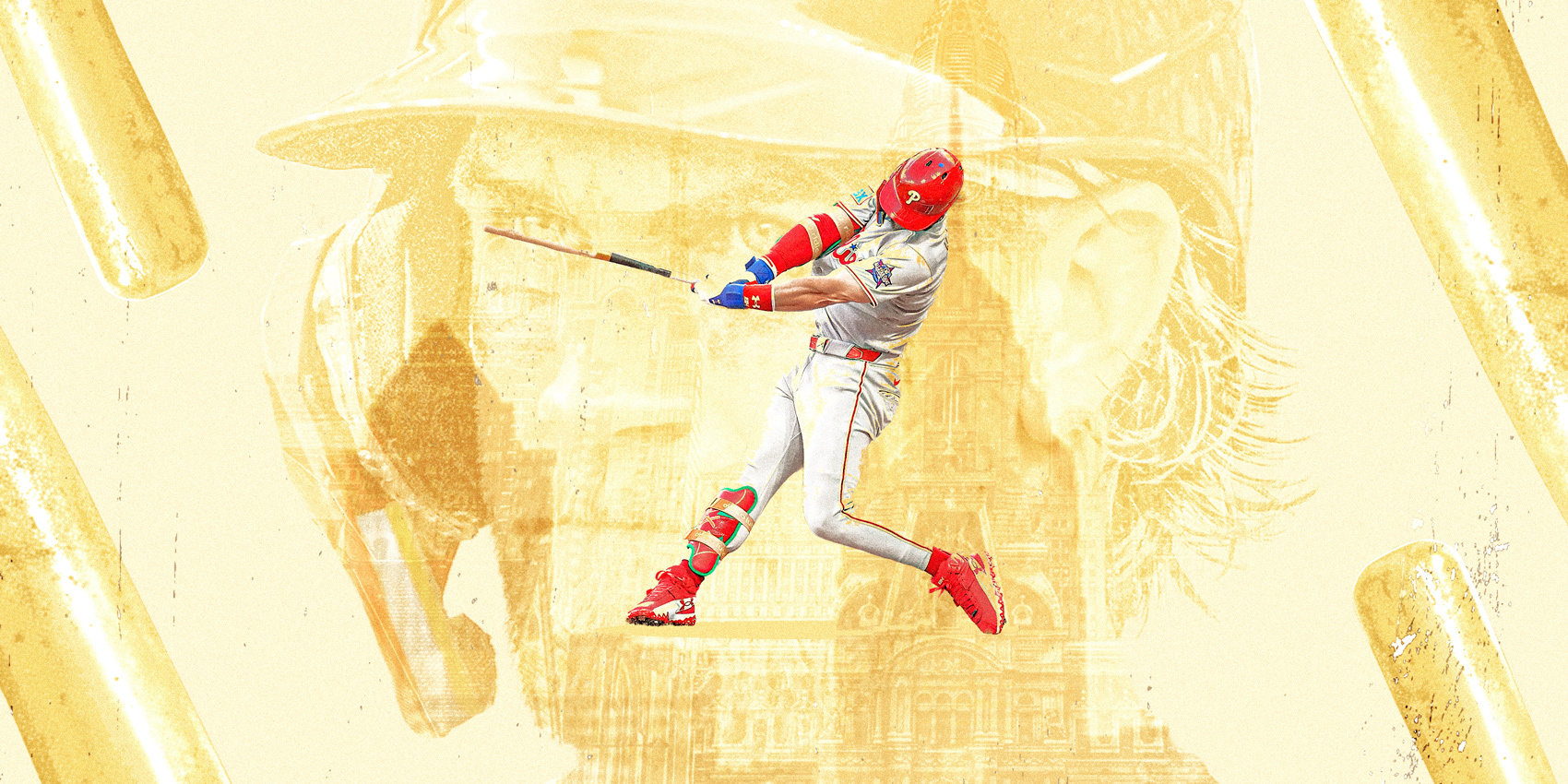
'Back then, showboating was kind of frowned upon. Now it's almost celebrated'
Beneath the cocksure facade lay something more sincere. Harper has always comported himself with a fascinating mixture of entitlement and work ethic. He was a kid who accompanied his rebar-laying dad to construction sites and spent his entire childhood being lavished with praise from strangers for his preternatural sporting talents. That type of life experience can create a complicated character.
"Everybody hated Harper more than anyone else in baseball," a former big leaguer, given anonymity because they currently work for a team, explained. "But the people that really paid attention to how he played knew that was going to change. All the hype, all the press, all the hate — he played so f***ing hard, you knew one day people would respect him for more than his talent."
Former Phillies manager Rob Thomson, who managed the slugger for parts of five seasons, vividly remembers his first in-person look at Harper. It was spring training 2012, and Harper was trying to make the Nationals' big-league team out of camp. Thomson, then the Yankees' third-base coach, was at Washington's spring facility for a game.
"We had all the big guys — A-Rod, Jeter, Teixeira. We started to take BP, and he came out of the dugout, and he sat in the chair outside just to watch our guys," Thomson recalled. "And I'm sitting there looking at him, in my mind, I'm thinking he's just watching these guys, how they go about their business, what their process is, how they prepare for the game. I always appreciated that."
Years later, after Harper signed with the Phillies, Thomson asked him about that afternoon in Florida.
"'That's what I was doing,'" Thomson remembers Harper confirming. "'I just wanted to watch great players hit and prepare.'"
Gradually, that version of Harper became more noticeable. Some of what changed was simple: time, trial and error, growing up. He navigated the unglamorous process of becoming an adult in the public eye, with every misstep documented and scrutinized. Leaving D.C. for Philadelphia was an obvious turning point. Harper's older Nationals teammates could be harsh, obstinate, demanding. That was never really his team.
But Philadelphia was a different story. Here, Harper could be the star of the show, the center of a universe.
"I feel like a lot of us came up in such a different era," Harper said before a recent game, looking around a Phillies locker room full of veteran players. "It was very hard-nosed, very 'you're gonna do it my way or you can get out of here.'"
As Harper inched from rookie to veteran, the younger players matriculating into the league held a higher opinion of him. They'd grown up admiring his skills and demeanor. Nationals outfielder Dylan Crews remembers chasing Harper across spring training fields to get his autograph. That dynamic helped upgrade Harper's reputation. As did his willingness to offer advice to younger players; he soon became known around the game for his pump-up talks at first base.
But it wasn't just Harper who evolved. The sport itself changed. Demonstrations of emotion became accepted, appreciated, celebrated. Baseball's stoic culture slowly and grudgingly moved toward Harper — not the other way around. The sport that once treated bat flips as personal insults now markets them. They "let the kids play." Younger fans, raised on a version of baseball that celebrates exactly the kind of flair Harper has always brought, never needed convincing. In short, the league eventually caught up to its own audience.
The irony, of course, is that Harper now looks like something of a curmudgeon by comparison.
"I have fun playing," he told The Athletic's Matt Gelb in February. "It's not that I don't have fun. I just don't smile as much as everybody wants me to smile."
Said Realmuto: "I think he's just grown up as a human being. If you watch him play the game now, he's not showboating. It's weird — back then, showboating was kind of frowned upon. Now it's almost celebrated in this game. He's kind of flipped to do the opposite of what's accepted. You can see now he plays for the team and to win, as opposed to for his own image."
'Oh, yeah, he's Bryce Harper'
That last part isn't completely true.
The current iteration of Harper might not be as performative or ostentatious as his younger self, but he remains hyperaware of how people perceive him. He's a TikTok influencer now. His locker is a kaleidoscope of multicolored Under Armor cleats that he matches to his other on-field accessories with great care. He often dons a headband labeled "The Showman." Harper thoroughly understands that baseball is an entertainment business. He's not competing with the Marlins — he's competing with the movies.
And more often than not, Harper's dramatic timing is on point. Take the cold-blooded, calm response to his "Bedlam at The Bank" home run in the 2022 NLCS. Or his piercing staredown of Orlando Arcia in the 2023 NLDS after Arcia was overheard mocking Harper in the clubhouse the night before. Or his outrageous batflip after a game-tying home run in the 2026 World Baseball Classic final.
That's not to say there haven't been missteps. His fake middle finger gesture to booing Nationals fans earlier this year was odd. So was the picture he posted of himself receiving blood oxygenation therapy over the winter. The ongoing controversy regarding a Cameo video he recorded for a gambling VIP on behalf of FanDuel was, at best, an example of questionable judgment. And behind the scenes, Harper is occasionally a bit temperamental, particularly when he's not hitting well. That moodiness, even in a clubhouse stocked with vets, can be contagious in a bad way.
But for the most part, Harper has matured into a more practical, more thoughtful, more respectable version of himself. Along the way, he has fulfilled the preposterous expectations thrust upon his shoulders as a teenager and helped redefine, for the better, the culture of an entire sport. Nobody is mad about that kiss anymore.
A World Series ring still eludes him, keeps him going, fuels his fire. That is the only major box left to check. Barring calamity or controversy, Harper will one day be inducted into the National Baseball Hall of Fame. Considering the singular nature of his baseball upbringing, the mind-bending effects of fame at a young age and all that was placed on his shoulders, that should never be taken for granted. Harper's unrelenting faith in himself, the self-assuredness that rubbed so many the wrong way, now looks prophetic.
As one former Nats teammate put it, "At first it was like, 'Who the f*** does he think he is?'
"Now, it's like, 'Oh, yeah, he's Bryce Harper.'"