
Around the World 5/2/26
As of early May 2026, the global landscape is dominated by high-stakes military standoffs, economic instability linked to energy crises, and shifting diplomatic alliances.
Middle East Conflict and Global Energy
The primary global focus is the ongoing war between the United States and Iran, which has reached a critical 60-day legal threshold. President Trump recently rejected a peace proposal from Tehran. Dueling blockades in the Strait of Hormuz have driven international oil prices to their highest levels since 2022, peaking near $126 a barrel. This has spiked U.S. gas prices to a four-year high of approximately $4.30 per gallon. Simultaneously, Israel has escalated airstrikes in southern Lebanon despite a U.S.-brokered ceasefire, leading to dozens of civilian casualties. [1, 2, 3, 4, 5]
Diplomatic Shifts and Security
The U.S. is signaling a major shift in its traditional alliances. The Pentagon announced the withdrawal of 5,000 troops from Germany, a move seen as a response to disagreements over the Iran war strategy. President Trump has also threatened similar withdrawals from Italy and Spain. In other regions, the fall of the Assad regime in Syria has left Kurdish allies in a state of “limbo,” while Mali sees the withdrawal of Russian-backed forces after local rebel attacks. [6, 7, 8, 9, 10]
Domestic and Economic Impacts
- Aviation: Spirit Airlines has ceased all operations following failed government bailout talks and a fuel crisis.
- Space: NASA is preparing for the Artemis II launch, the first crewed lunar mission in over 50 years.
- National Security: A suspect has been charged with an attempted assassination of the President following a security breach at the White House Correspondents’ Dinner. [4, 7, 11, 12, 13]
Summary
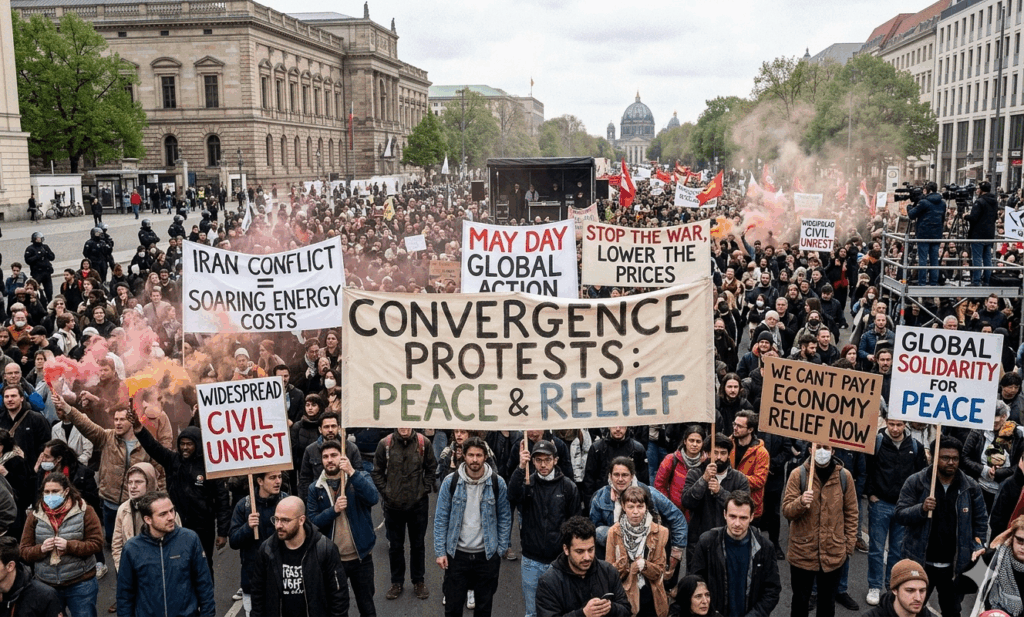
The conflict between the U.S. and Iran has triggered a global energy crisis, driving oil prices toward $130 a barrel. This surge has spiked transportation and manufacturing costs, fueling record inflation. In response, massive “May Day” protests erupted globally as citizens demand immediate peace and economic relief. Demonstrators in major cities cite “war-fueled poverty” as the primary driver of civil unrest. The convergence of high fuel prices and military instability is straining government budgets and domestic stability. These protests highlight a growing public impatience with prolonged geopolitical tensions that directly impact the daily cost of living. [2]