

Wimbledon: The race for Grand Slam No. 25 is over for Novak Djokovic
The level of tennis Novak Djokovic continues to reach at every Grand Slam is a marvel. At age 39, he continues to show up, grind out incredible victories and put himself in position to do something nobody could have ever conceived when he reached his first Wimbledon semifinal in 2007.
But as of Friday afternoon, the chapter of Djokovic's career where he can realistically chase a 25th major title is closed.
It's not going to happen.
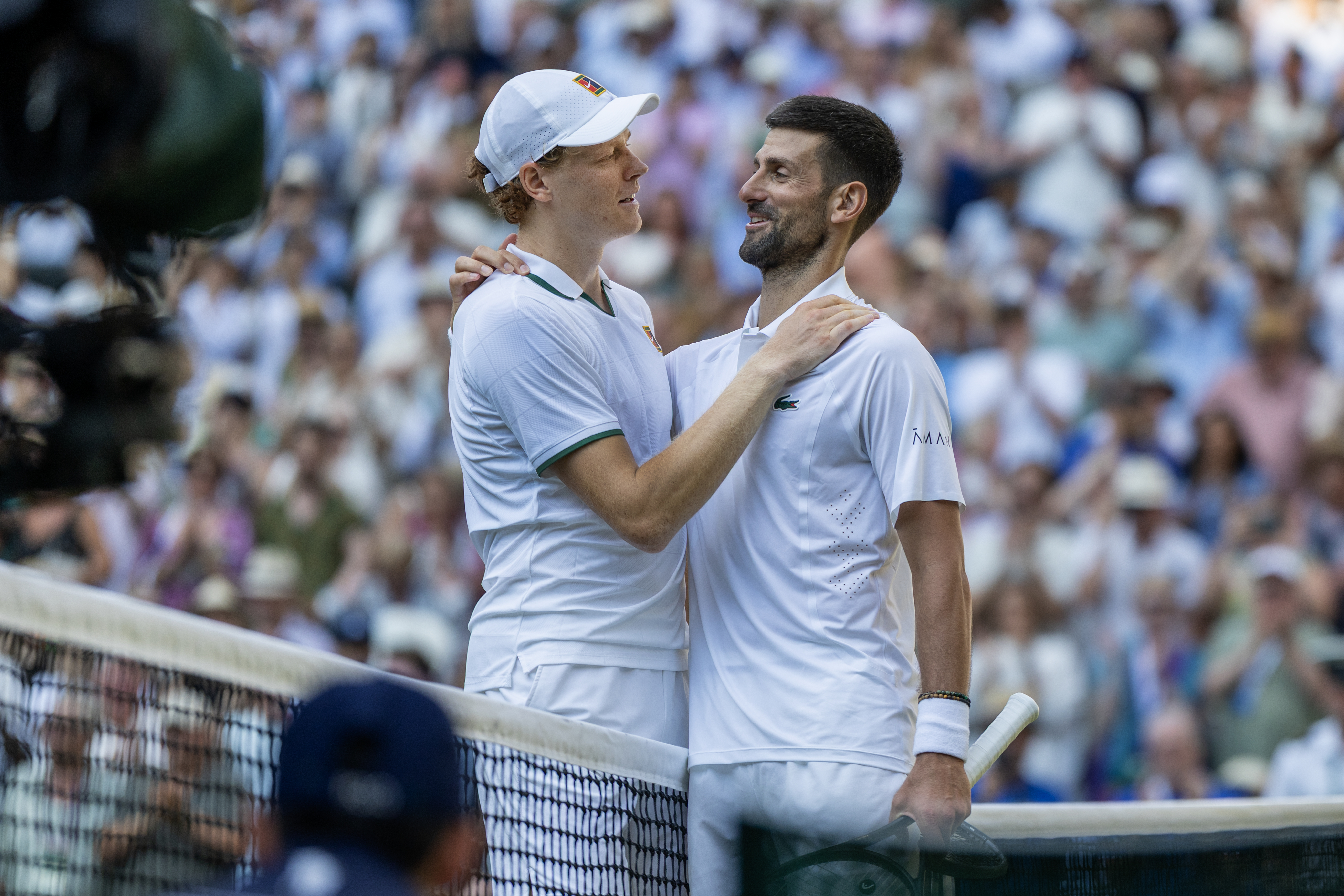
Jannik Sinner's commanding and barely competitive 6-4, 6-4, 6-4 semifinal victory over Djokovic wasn't necessarily about the matchup or the gap between them as tennis players. Rather, it felt like a manifestation of the challenge Djokovic faces now at every Grand Slam.
Djokovic remains an incredible tennis player. He is also no longer equipped to win seven matches in a best-of-five set format without the gas tank hitting empty. And if he can't get to the finish line at Wimbledon, where the conditions are more favorable to him than the other Slams, he can't do it anywhere.
It's over.
Remarkably, if Djokovic wants to continue competing and putting in work off the court, it's clear he can still go deep in big tournaments and beat most of the best players in the world. In the last seven majors, he's made the semifinals six times while almost never playing events on the regular tour. The level he can still produce is absurd and we are lucky to still watch him.
But a Grand Slam isn't just a series of opponents and matches played in a vacuum. It's a two-week marathon where, by the end, adrenaline and willpower can only do so much to mask the cumulative damage.
Djokovic's problem is not necessarily Sinner, though a 24-year-old No. 1 playing for his fifth major title Sunday is certainly a huge obstacle. The bigger issue is what it takes out of Djokovic just to get to Sinner.
Prior to the semifinal, Djokovic needed 5 hours, 15 minutes to beat Felix Auger-Aliassime, nearly 3 ½ hours to beat Roman Safiullin, a shade more than three hours against Arthur Rinderknech, and even a bruising 3 hours, 12 minutes in the first round against Wu Yibing.
Out of his first five matches, Djokovic had just one easy day at the office, dispatching Stefanos Tsitsipas in three quick sets. And this is on grass, where the theory is that shorter points and less physical matches would help Djokovic be fresh for an inevitable match against one of the top seeds.
But by the time Djokovic showed up on Center Court against Sinner, the inefficiency in earlier rounds had clearly taken a big toll. Yes, Sinner was particularly sharp and looks primed to win his second straight Wimbledon title against No. 2 seed Alexander Zverev in Sunday's final. But the way he bullied Djokovic around the court, not even yielding a break point until the third set (that he quickly erased), Sinner's only real threat was boredom. There was nothing left of his opponent.
And this problem isn't going away for Djokovic. In recent years, he has increasingly found himself dropping sets early in Grand Slams to ordinary opponents. But every minute he spends on court knocking off rust or trying to play his way into form in early rounds has compounding interest on his chances of winning the tournament. The margins have gotten so thin that he just can't afford to play a long, physical match against anyone before he gets to Sinner.
In a strange way, it might actually benefit Djokovic if he was unseeded and drew Sinner, Zverev or Carlos Alcaraz in the second round when he's fresher. But because he keeps getting to Grand Slam semifinals, his ranking makes that impossible.
We almost saw that theory at work this year in Australia when he stunned Sinner in the semifinals. The difference back in January? Djokovic benefited from a retirement in the quarterfinals, a walkover in the round of 16 and three straight-set wins to start the tournament.
It proved that when Djokovic's body isn't worn down, he can still do remarkable things on the court — even against the best guys in their prime. But getting that much rest during a Grand Slam is an anomaly, and the trend is only going in one direction as Djokovic nears his 40th birthday. Even if he can go deep in the draw, there are enough players who can land body blows on him now that he won't get to Sinner or Alcaraz or Zverev without some damage.
Whether it's next month's U.S. Open or the set of majors next year, the road map to winning seven matches just doesn't seem possible anymore.
It's possible Djokovic has internalized that reality. After last year's U.S. Open semifinal loss to Alcaraz, he basically admitted he couldn't beat them both (including Sinner) in the same tournament playing best-of-five. Alcaraz's wrist injury this summer gave Djokovic a reprieve from that possibility — and he still didn't come particularly close to getting it done at Wimbledon.
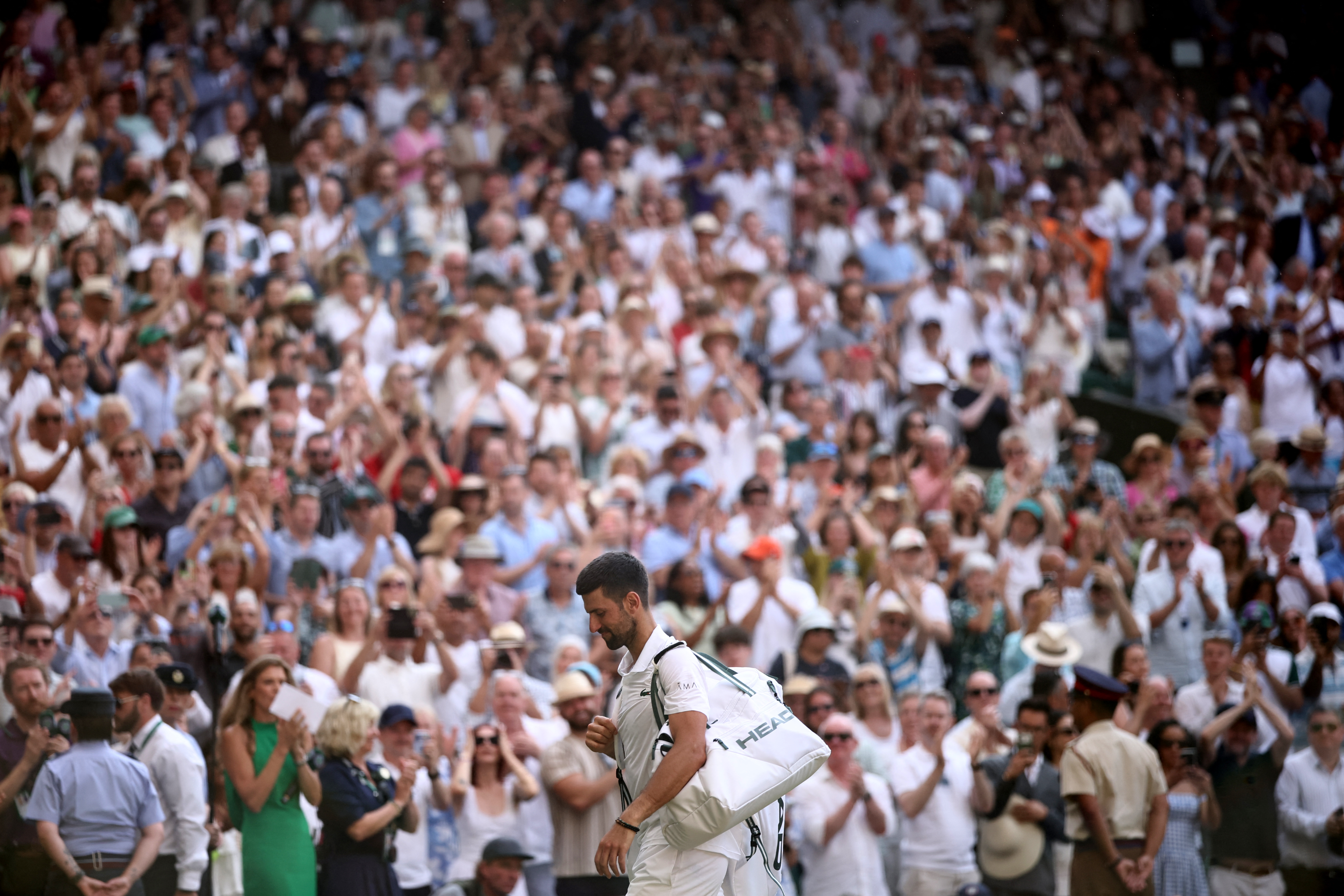
But hopefully Djokovic will continue to play anyway because, as the quarterfinal win over Auger-Aliassime showed, he still has a lot of fight and plenty of game to showcase. As he left Center Court on Friday, he spent an extra moment smiling and acknowledging the crowd, which you can probably interpret as a man unsure whether he'll be back next year.
Only Djokovic can determine whether fighting for semifinals, not trophies, is enough for him to keep going. But after this Wimbledon, it's the reality he'll have to reckon with.